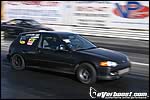
Tag: Drag Racing

  • Wednesday Night Drags Back in Full Force at Sonoma Raceway

    Wednesday Night Drags Back in Full Force at Sonoma Raceway

    The popular Wednesday Night Drags program kicks off its 28th consecutive year at Sonoma Raceway on March 16, 20165.

    WHAT: The popular Wednesday Night Drags program will kick off its 28th consecutive year at Sonoma Raceway on March 16, 2016. The raceway will open its gates most every Wednesday night from March 16 -Nov. 30 for fans who would like to race down the world-famous quarter-mile drag strip.

    OBJECTIVE: The objective of the program is to give people, from teenagers to working professionals to senior citizens, a safe, legal and controlled environment in which to race their vehicles, as opposed to using city streets or back-county roads.

    WHEN: Most Wednesday nights beginning March 16. Gates open at 3:30 p.m., racing spans from 4 p.m.-10 p.m. The season runs through Nov. 30.

    Click Here to view schedule.

    TRACK: World-famous quarter-mile drag strip at Sonoma Raceway.

    WHO: Anyone with a driver’s license can compete, providing their vehicle or motorcycle passes a simple technical inspection. All vehicles must have mufflers. Please refer to the rules and regulations at http://www.racesonoma.com. The event attracts a varied crowd, including teenagers, mothers, working professionals and grandparents racing everything from Corvettes to Mini-Vans. Three-hundred cars are allowed to compete each Wednesday night. The weekly event attracts an average of 900-1,200 people (competitors and spectators).

    TOP THE COPS: An added bonus for high school students is the “Top the Cops” program. This will run in conjunction with the Wednesday Night Drags and offers high school students the chance to race against local law enforcement officers, who will be driving their squad cars. The program is designed to help take illegal racing off the streets and bring it to a safe, legal and controlled environment.

    COST: $25 competitors, $15 for students with their high school identification card, $10 spectators. For more information, call 800-870-RACE or visit http://www.racesonoma.com.

    Sonoma Raceway Wednesday night drag racing

  • Fuchs Continue Drag Racing Push With Usa Top Fuel Showdown Sponsorship

    Fuchs Continue Drag Racing Push With Usa Top Fuel Showdown Sponsorship

    Saturday, 29 November 2008 – Posted by Dean Neal

    (Sydney, NSW) Fuchs Lubricants have announced a major sponsorship arrangement with one of ANDRA Championship Drag Racing’s marquee events, the USA Top Fuel Showdown at Sydney Dragway, on December 26th and 27th.

    The Melbourne based lubricant specialists have take on the “presented by” rights, with the event to be known as Fuchs presents the USA Top Fuel Showdown. The move further strengthens Fuchs involvement in Australian Drag Racing.

    “Fuchs has invested in drag racing for a number of years now. We believe it is so important to show support in Australian sport and we are confident that our involvement is helping to both encourage the growth of drag racing in Australia, as well as maximise commercial value for Fuchs. Each event that passes further strengthens our resolve that drag racing is well worth investing in and we will continue to do so in the future” said Fuchs’ Managing Director Wayne Hoiles.

    The USA Top Fuel Showdown will see the likes of American top fueler Hillary Will, officially the world’s ‘fastest female’, after crossing the track timers at 315.49mph (508kmh) at an event in Richmond, Virginia earlier in the year.

    She will have her work cut out for her when she takes on the Australians at Sydney Dragway, facing competitors such as Australian Top Fuel Champion Phil Read and a plethora of other top quality drag racers. Whichever way it goes, the results are sure to be spectacular!

    Fuchs’ “presented by” rights is an extension of their already heavy involvement in Australian drag racing. Fuchs have been a long time sponsor of two teams competing at the USA Top Fuel Showdown – the Jim Read Racing and Lamattina Top Fuel Racing teams, as well as sponsoring events throughout the drag racing season, most recently, the Fuchs Australian Nationals at Sydney Dragway. Their financial contributions have been pivotal in the success of the teams, who without sponsorship, would not be able to reach the high results they currently and consistently achieve.

    “We at Fuchs believe our sponsorships are a mutually beneficial arrangement. Events like the USA Top Fuel Showdown are just another example of how drag racing is growing every year and how much exposure it is getting both at home and abroad. We are extremely proud to be a part of the growth of this sport and wish our teams the best of luck” finished Mr Hoiles.

  • IDRC International Finals

    IDRC International Finals

    RSVP’s will be guaranteed event registration and will not have to wait in line on raceday
    TO RSVP FOR THE RACE OR SHOW, PLEASE EMAIL
    promotion@hardmediainc.com

    IDRC 2008
    www.importdrag.com
    Saturday-Sunday, November 22-23, 2008
    8:00am – 2:30pm

    Auto Club Dragway at Auto Club Speedway
    formerly California Speedway
    9300 Cherry Avenue
    Fontana, CA 92335
    www.californiaspeedway.com

    TENTATIVE SCHEDULE

    Saturday, November 22nd, 2008
    8:00am Gates Open, Tech Opens
    9:00am Open time trials
    9:45am Lanes Close for Round 1 of Heads-Up Qualifying
    Be in the lanes by 9:45 or you will miss first qualifying round
    10:00am Round 1 of Heads-Up Qualifying
    10:30am Scheduled End of Heads-Up* Qualifying Round 1; Resume Open Time Trials
    11:15am Lanes Close for Round 2 of Heads-Up Qualifying
    Be in the lanes by 11:00 or you will miss second qualifying round
    11:30am Round 2 of Heads-Up Qualifying
    Noon Scheduled End of Heads-Up* Qualifying Round 2; Resume Open Time Trials
    12:45am Lanes Close for Round 2 of Heads-Up Qualifying
    Be in the lanes by 12:45 or you will miss second qualifying round
    1:00pm Round 3 of Heads-up Qualifying (if time and conditions permit)
    1:45pm End of IDRC Racing Day #1
    2:00pm Drag Race High TV Show Filming

    Sunday, November 23rd, 2008
    8:00am Gates Open, Tech Opens
    9:15am Lanes Close for Round 1 of Heads-Up Qualifying
    Be in the lanes by 9:15 or you will miss final qualifying round
    9:30am “Last Chance” Heads-Up Qualifying
    11:00am First Round of Heads-Up Eliminations (Quarterfinals)
    11:30am Start of Bracket Eliminations
    12:30pm Second Round of Eliminations (Semifinals)
    1:00pm Resume Bracket Eliminations
    2:00pm Final Round of All Heads-Up and Bracket
    2:30pm Event Scheduled Completion

    DRAG RACE CLASSES

    IDRC Pro Heads-Up Classes
    QK: Quick
    AM: All-Motor
    FWD: Pro-AM FWD
    PA: Pro-AM All-Motor
    ST: Street
    GTR: GT-R Challenge [R32, R33, R34 & R35’s: Run what you brung!]

    IDRC Non-Heads-Up Classes
    B: Bracket Racing (all-dials) – Classes for all cars from fast to slow!
    FR: IDRC Fun Runs – Open time trials

    The IDRC features classes for all levels of racers. IDRC Heads-Up Pro classes are for full race cars with turbo and nitrous. Pro-Am sportsman classes are geared towards hardcore street racers. And the Bracket classes allow racers of all levels to take a trip down the 1320. We have classes for everyone so come out and race your car!

    IDRC Pro Heads-UP Classes
    Run head to head with the fastest racecars on the West coast.
    Quick – FWD/RWD/AWD, 4/6 cylinder or 2-rotor Pro cars with 2 power adders
    All Motor – FWD/RWD/AWD, 4/6 cylinder or 2-rotor Pro cars, no power adders

    IDRC PRO-AM Classes
    Compete with the fastest street trim cars on the West coast.
    Pro-Am FWD – FWD, 4/6 cylinder cars, with 2 power adders
    Pro-Am All Motor – FWD/RWD, 4/6 cylinder or 2-rotor cars, no power adders

    IDRC True Street Classes
    True Street Class is designed towards real street cars on DOT radial tires.
    True Street Turbo RWD/AWD – RWD/AWD, 4/6 cylinder or 2-rotor cars, with 2 power adders

    IDRC GTR Challenge
    This year we will be introducing the Nissan Skyline GTR Challenge for all GTR’s
    No limitations; run what you bring.

    IDRC Bracket Racing – All Dials

    ADMISSION PRICES
    SPECTATOR
    Saturday $15.00
    Sun day $20.00
    2-Day $30.00
    Children [11 & under] $ 5.00

    RACER ENTRY
    2-Day Racer Tech Card $60.00
    Fun Run (each day) $40.00
    Questions regarding rules, vendor space and sponsorship contact IDRC at 714-593-0280 or promotion@hardmediainc.com

    SHOW INFO

    EVO-1 CAR SHOW
    Sunday, November 23, 2008
    Roll-in at 8am
    Carshow 9am-3pm

    EVO 1 CAR SHOW ENTRY $40
    *includes 2 total passes

    CLASSES

    Best of Show
    Best Team
    Honda/Acura
    JDM
    Toyota/ Lexus
    Nissan/ Infiniti
    European
    Mitsubishi
    Sport Compact
    Performance

    Questions regarding car show contact IDRC at 714-593-0280 or promotion@hardmediainc.com

  • You Need to Hook it Up! Part Two

    You Need to Hook it Up! Part Two

    11/24/2004
    By: Roger Hewson

    Welcome back to class students. After reading the first installment of our mini-series on putting the power to the ground in your front-wheel-drive car, there should be a decent understanding of how the chassis on your FWD should be set up. In this installment we are going to get down to some of the simpler reasons you spin tires at the drag strip and how the wrong choice in tires will kill the way your car comes out of the hole.


    We have all tried to go fast without decent tires at the track. Everyone has seen the “drag racer” with the EK Civic powered by a built B20 trying to get the power to the ground through a four-puck race clutch, Type R gears with no LSD and 17 inch Volk TE37 wheels. The pricey wheels are wrapped with a set of 215/40/17 Champro tires bought for $30 at Cooters Discount Alignment and Rubber and he or she can’t figure out why the car spins the tires through fourth gear no matter how much smoke they make in the burnout box. Hmm…


    So what’s going on here? What can be done to get our fictitious friend mentioned above flying down the track? Like we said in Part One, for every action, there is a reaction. Some simple problem solving should help out our knowledge-challenged buddy. Let’s try to figure out what he is doing wrong here.


    Bigger sidewalls on a higher profile tire act as a cushion.
                  

    First of all, the tire is the most important thing there is when it comes to putting power to the ground. Who hasn’t seen a tire commercial going on and on like a broken record about the four little patches which separate you from the road? Anyone who knows anything about cars will tell you tires are critical to traction just like feet are critical to walking.


    To find out more we went right to the source and spoke two of the most respected tire companies when it comes to drag racing; Mickey Thompson and BFGoodrich. We pretty much got the exact same stories from their tire engineers regarding what works and what doesn’t. Jason Moulton of Mickey Thompson and Oscar Pereda of BFGoodrich gave us the skinny on what the right meats are to use on your FWD car and why.


    Both Pereda and Moulton recommend changing to a wheel and tire combination that gives you as much sidewall as possible. “The sidewall of the tire absorbs power when you launch the car aggressively,” says Pereda. “This goes for a dedicated drag tire or just a regular street tire.” The bigger sidewalls on a higher profile tire act as a cushion and soften the shock to the contact patch of the tire helping to prevent wheel spin. The larger the sidewall, the more cushion area there is to absorb shock allowing a harder launch or more power to be applied.


    This is especially true when it comes to a dedicated drag tire like the BF Goodrich Drag Radial or the Mickey Thompson Sportsman because their sidewalls are designed to absorb the energy which causes wheel spin by being softer so they wrinkle at lower air pressures, making them stretch like a rubber band. “The smaller the wheel the more sidewall you can run and the more elastic the tire is going to be when launched,” says Moulton. “But you can only go so small with a wheel and so big with the sidewall before changing how tall the tire is and messing with the gearing or running into fitment or stability issues,” says Moulton. So how do we know what tire size and type to run?


    Before we figure out what size we want, we need to know what type of tire we are going to run, normally either a bias ply or radial. The terms bias ply and radial have to do with the construction of the tire and how the belts of the tires are wound and assembled. The construction of the bias ply tire is much more pliable than the radial because the arrangement of the nylon belts which give the tire it’s shape and strength are woven at 30 or 40 degree angles. When a Radial tire is made the nylon (or steel) belting is woven in a radial pattern and there are usually more layers woven in for more strength.


    Because the bias ply tire is so much more pliable high horsepower cars like to run them because they tend to expand and grow taller at high speeds, allowing the car to run more mph at the end of the track. They also tend to wrinkle much easier at lower pressures than radials do without deformation of the contact patch. The downside is because of how pliable they are they tend to walk more meaning the car will dance side to side while driving because the sidewalls are not stiff enough to prevent the car from moving around. This can be a bit unsettling at over 100 miles per hour in a FWD car considering these are the wheels you steer with. One person told me the best thing to do is just hang on and hold the wheel straight. Radials, because of their sturdier construction are much more street friendly which comes into play if you don’t have the bankroll to buy a wheel/tire combo solely for the track.


    BFGoodrich developed a special compound for their FWD Drag Radial, making the tire more controllable


    Running a radial like the BFGoodrich Drag Radial on the street would feel no different than having a typical radial tire on your car. When you get to the track the difference can be felt with almost slick-like traction out of the hole. Theory would tell you the radial construction of the BFGoodrich tire would put it at a disadvantage on the starting line against a bias ply tire, but it’s not completely true. Paul Efantis would pull the front tires off the ground regularly when he was driving his Toyota Supra in 2003.


    “Progressiveness is one of the keys to the success of the BFGoodrich Drag Radial,” says Pereda. “A tire has to break loose progressively or you’re not going to be able to control it.” BFGoodrich developed a special compound for their FWD Drag Radial which made the tire extra controllable after breaking loose and realized it would work well on both front and rear-wheel-drive tires and improved the entire Drag Radial line. “Our tires are very gentle when they let go, easy to control,” says Pereda.


    What all of this means to our EK buddy is a few things. If he wants to keep the big Volk wheels and run a 17-inch BFGoodrich Drag Radial he can. Running a smaller wheel is a problem for some people who need the clearance because of big brake setups. The low profile tire is not going to hook nearly as well as a tire on a 13 or 14 inch wheel with a ton of sidewall, but it will be a huge step in the right direction. When the Drag Radials break loose they will do so with plenty of warning and will be very controllable. It still will not allow the EK Civic driver to come out of the hole with the authority they might want to, but they can lay into the throttle much earlier then was possible before.


    The tire size is related to the goal of the racer.
                  

    “The tire size is related to the goal of the racer,” says Moulton. “If you are bracket
    racing, use the tallest, widest tire you can fit for consistency and if you are
    heads-up racing, use the smallest tire that will get the job done.” So we need to look at how often the car is raced, and what kind of racing our little friend does. Remember this is just an example. You can apply it to whatever you drive, just change the variables to suit your needs.


    A car with modest power doesn’t need a huge tire like the turbo cars run. An ideal setup if the car does not have a set of big brakes is a set of 13-inch wheels with the shortest, fattest tires allowed without running into wheel spin problems on the starting line. Like we mentioned above how well the car is going to hook up depends on how serious the owner of the car is willing to get. A set of 215/40/17 Drag Radials will have some serious bite, but they will not give you the slingshot launch of a pair of tall BFGoodrich Drag Radials or Mickey Thompson ET Streets mounted on a set of 13 or 14 inch wheels would have. Now how about those clutches and LSDs?


  • Extreme Autofest – Sonoma, Ca 09/07/03

    Extreme Autofest – Sonoma, Ca 09/07/03

    Extreme Autofest – Sonoma, Ca 09/07/03

    Drag Racing with the big boys,  AEM Civic – Stephan Papadakis,  Enkei NSX – Adam Saruwatari two big names in sport compact drag zip down Sonoma’s 1320. Local racing crew SVP Speed Velocity Performance brought three cars to compete. www.wicked1racing.com

    Click Here to View Gallery

    ExtremeAutofest-SonomaCa09070306104DSC04088.jpg
    ExtremeAutofest-SonomaCa09070306038DSC04151.jpg
    ExtremeAutofest-SonomaCa09070306006DSC04314.jpg

502 Bad Gateway

502 Bad Gateway


cloudflare