Blog

  • Hot Import Nights in Del Mar 2-05-2000

    Hot Import Nights in Del Mar 2-05-2000

    The Y2K Kickoff: Hot Import Nights Del Mar 2000

    Date: February 5, 2000

    Location: Del Mar Fairgrounds, Del Mar, California

    Producer: Vision Entertainment


    On February 5, 2000, Vision Entertainment opened the new millennium’s show season by bringing Hot Import Nights (HIN) to the Del Mar Fairgrounds. Acting as the first major Southern California event of the Y2K era, this exhibition set the stylistic and technological baseline for what would become the most explosive year in the history of the sport compact industry.

    The Nightclub Environment

    While the Del Mar Fairgrounds had been used just months earlier for brightly lit, purist-focused events, Vision Entertainment transformed the space to fit their signature HIN formula.

    • Blackout Conditions: The overhead lighting in the O’Brien and Bing Crosby exhibition halls was intentionally shut down. The environment was instead driven by theatrical lasers, heavy fog machines, and elevated DJ stages pumping high-BPM trance and techno music.
    • The Neon Mandate: Because of the darkened halls, underbody neon kits transitioned from an optional aesthetic accessory to a competitive necessity. StreetGlow and LiteGlow neon tubes (frequently in blue, green, and pink) became the primary light sources, allowing judges and attendees to inspect the lower halves of the vehicles.

    The Y2K Stylistic Shift

    The February 2000 event marked a definitive departure from the subtle, bolt-on aesthetic of the late 1990s, pivoting hard into the “extreme” modification era.

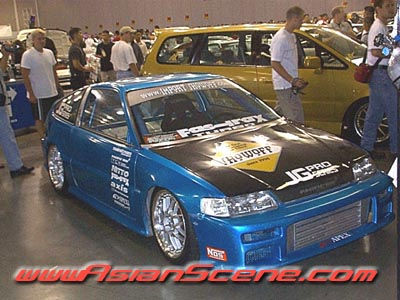
    • Aggressive Aerodynamics: Factory-optional front lips were rapidly replaced by aggressive, full-replacement fiberglass bumpers. The show floor saw a massive influx of kits from Japanese manufacturers like Bomex and C-West, alongside the highly polarizing, dramatic styling of VeilSide.
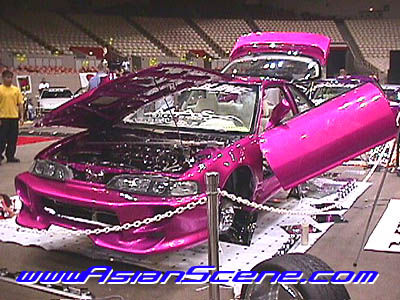
    • Color-Shifting Paint: If 1999 was defined by factory pearl paints, early 2000 was the dawn of the color-shifter. Chameleon paints (often utilizing House of Kolor’s Kameleon or Nippon Paint’s Maziora lines) became the ultimate status symbol in the “Wild” categories, shifting from purple to green to gold depending on the angle of the convention center spotlights.
    • Aluminum Wings: Subtle factory spoilers were replaced en masse by towering, CNC-machined aluminum GT wings, signaling a distinct stylistic shift toward the exaggerated profiles that would soon hit the mainstream.

    Platform Debuts and Maturation

    The early 2000 show floor featured the arrival and evolution of chassis that would dominate the coming decade.

    • The 7th Gen Celica: Toyota had recently released the completely redesigned 2000 Celica (T230). The Del Mar event featured some of the very first heavily modified examples, immediately validating the angular hatchback as a prime canvas for the aftermarket.
    • The S2000 Matures: After making brief, lightly modified appearances in late 1999, the Honda S2000 (AP1) returned to the show floor with serious engine modifications. Comptech supercharger setups became the premier upgrade for owners looking to secure top engine bay points.

    In-Car Electronics (ICE)

    Occurring in the gap between the 1999 launch of the Sega Dreamcast and the impending U.S. release of the PlayStation 2, the audio/video categories were highly standardized but increasingly elaborate.

    • The Fiberglass Trunk: Standard carpeted subwoofer boxes were deemed obsolete for top-tier competitors. Trunks were entirely gutted and rebuilt using custom-painted fiberglass enclosures designed to seamlessly integrate JL Audio, Kicker, or Rockford Fosgate subwoofers with floating amplifier racks.
    • Screen Saturation: The metric for a winning interior was no longer just the presence of an LCD screen, but the quantity of screens. Competitors mounted 5-inch and 7-inch monitors in door panels, headliners, and motorized trunk lids.

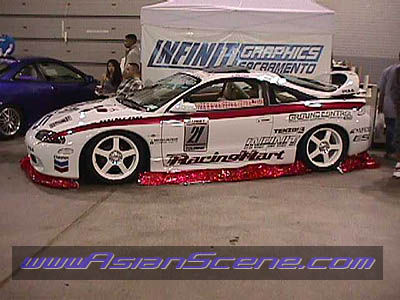
    The February 2000 Del Mar HIN occurred exactly as Hollywood was locking in its vision for the automotive subculture. During this exact window, the production team for Universal Studios’ The Fast and the Furious (still operating under the working title Redline) was finalizing its vehicle casting. The extreme aesthetic displayed at Del Mar—defined by heavy fiberglass, neon underglow, and complex vinyl graphics—served as a direct template for the hero cars that would soon be immortalized on film.
  • Import Showoff Classics in Anaheim CA 10-19-1999

    Import Showoff Classics in Anaheim CA 10-19-1999

    The Millennium Finale: Import Showoff Classic Anaheim 1999

    Date: December 19, 1999

    Location: Anaheim Convention Center, Anaheim, California

    Producer: Mainstream Productions (Ken Miyoshi)

    On December 19, 1999, Mainstream Productions hosted the Import Showoff Classic at the Anaheim Convention Center. Billed as the year-end championship for the sport compact industry, this event served as the definitive capstone to the 1990s tuning era. Gathering the highest-scoring vehicles from the year’s regional circuits, the Anaheim event provided a final, highly competitive exhibition in Southern California’s automotive epicenter just days before the turn of the millennium.


    The “Classic” Championship Format

    The “Classic” designation indicated that this was a curated championship rather than a standard tour stop.

    • Curated Floor Space: The exhibition hall featured a heavily vetted roster of vehicles, primarily highlighting winners from previous 1999 Showoff events held in Del Mar, Pomona, and San Jose.
    • The Drive-Up Stage: Maintaining the hallmark of Ken Miyoshi’s events, top contenders were required to start their engines and drive onto an elevated center stage for live evaluation. This strict standard verified mechanical functionality and separated running performance builds from static exhibition vehicles.
    • Rigorous Judging: The Showoff rubric prioritized technical execution. Points were awarded for rare, imported Japanese Domestic Market (JDM) components, cohesive styling, and flawless interiors, heavily penalizing unfinished or purely cosmetic modifications.

    The Peak of Pre-Y2K Automotive Trends

    Occurring at the absolute end of the decade, the vehicles at the Anaheim Classic represented the most finalized iterations of 1990s tuner trends.

    • JDM Purity: The Southern California scene had firmly pivoted toward JDM authenticity. The show floor was dominated by Honda Civics and Acura Integras featuring complete Japanese Type R exterior conversions. Builders showcased right-hand-drive (RHD) steering conversions, thin side moldings, and authentic Mugen or Spoon Sports aerodynamic components.
    • Wheel Evolution: The era of heavy chrome wheels was largely absent from the top competitive brackets. The Anaheim event solidified the dominance of lightweight forged wheels, with the Volk Racing TE37, Desmond RegaMaster EVO, and Racing Hart CP-035 establishing themselves as the standard for top-tier competitors.
    • The B-Series Standard: Engine bays were judged with extreme scrutiny. The standard for Honda platforms was the DOHC VTEC B-Series engine (B16 or B18C). The event highlighted early iterations of the “wire tuck” (hiding the factory wiring harness for a minimalist look), with engines frequently bolted to aftermarket forced-induction systems from GReddy, Drag Generation, or Revhard.

    In-Car Electronics (ICE) at the Millennium

    The late December timing meant that holiday consumer electronics heavily influenced the “Multimedia” judging categories.

    • 128-Bit Integration: The Sega Dreamcast, released in the U.S. just three months prior, was the centerpiece of nearly every major audio/video build, rapidly replacing the older Sony PlayStation as the console of choice for maximum points.
    • Custom Fabrication: Competitors displayed a mastery of fiberglass fabrication, seamlessly molding 5-inch and 7-inch LCD monitors into passenger airbags, headrests, and custom trunk enclosures alongside expansive amplifier racks.

    The Import Showoff Classic in December 1999 holds a unique place in automotive history due to its timing and location.

    During the late fall and winter of 1999, Universal Studios was actively in pre-production for a film under the working title Redline (later released in 2001 as The Fast and the Furious). Key technical advisors for the film were deeply embedded in the Southern California show scene. Massive year-end gatherings like the Anaheim Classic served as direct visual reference points and casting grounds for the vehicle styles that would soon define the sport compact culture for a global audience.


  • Import Showdown in Sacramento CA 11-21-1999

    Import Showdown in Sacramento CA 11-21-1999


    The Capital City Exhibition: Import Showdown Sacramento 1999

    Date: November 21, 1999

    Location: Sacramento Convention Center, Sacramento, California

    Event Type: Indoor Car Show

    On November 21, 1999, the Northern California and Central Valley tuning communities converged at the Sacramento Convention Center for the Import Showdown. As the weather cooled in late November, this massive indoor event served as the definitive season-ender for the region’s “Show” circuit, bringing the top-tier builds out of the elements and under the bright convention hall lights before the close of the millennium.

    The Convention Center Dynamic

    Hosting the event inside the Sacramento Convention Center dictated a strict focus on aesthetics and presentation.

    • The Indoor Standard: Unlike outdoor parking lot meets, the convention center environment required meticulous detailing. The polished concrete floors and overhead lighting meant that undercarriages, engine bays, and multi-stage paint jobs were subjected to intense scrutiny by judges and spectators alike.
    • Staging and Displays: Competitors utilized the indoor space to build elaborate displays. Cars were frequently parked on custom carpets or mirrors to highlight chrome suspension components, with velvet ropes and stanchions becoming common additions for the top-tier crews to protect their late-season builds.

    The Central Valley Aesthetic

    The Sacramento location brought out a distinct blend of styles, acting as a geographic bridge between the “clean” track-oriented builds of the San Francisco Bay Area and the highly customized, lowrider-influenced aesthetics of the Central Valley.

    • Paint and Bodywork: The Showdown floor featured an unusually high concentration of complex paintwork. Candy apples, heavy metal flakes, and color-shifting pearl coats (often utilizing House of Kolor products) were prominently displayed, showcasing the region’s deep roots in traditional custom car painting.
    • The “Wild” Category: Custom fiberglass fabrication was at a premium. Widebody kits, molded side skirts (where the seams between the body and the fiberglass are filled and smoothed), and custom-vented fenders were heavily favored by the local judges in the “Wild” classes.

    Late 1999 Technology Integration

    Occurring near the very end of the year, the cars inside the convention center represented the absolute peak of 1999 consumer electronics.

    • The Console Wars: The newly released Sega Dreamcast (released in September) was the undisputed king of the In-Car Electronics (ICE) categories. Builders scrambled to have the 128-bit console custom-molded into their center consoles or passenger-side airbags just in time for the November show.
    • Audio Engineering: Indoor shows amplified the impact of heavy audio builds. The Sacramento event featured massive Sound Pressure Level (SPL) setups, with entire rear-seat areas converted into fiberglass subwoofer enclosures painted to match the exterior of the vehicle.

    Regional Crew Battles

    The Sacramento Convention Center provided a neutral battleground for Northern California’s most prominent car clubs to settle the year’s final standings.

    • NorCal vs. Central Valley: The event highlighted the friendly but fierce rivalry between the established Bay Area crews—who typically favored JDM (Japanese Domestic Market) authenticity and bolt-on performance—and the Sacramento/Stockton crews, who often leaned into heavier aesthetic customization and elaborate audio-visual presentations.
    • Vendor Midway: The indoor format allowed local performance shops and audio retailers to set up substantial vendor booths. These booths not only sold parts but served as anchor points for the show, often displaying their highest-horsepower customer cars as centerpieces.

    Historical Context

    The Import Showdown at the Sacramento Convention Center on November 21, 1999, effectively closed the book on the 1990s tuning era in Northern California. By gathering the region’s best builds under one roof, it documented the exact moment when the scene transitioned from grassroots street modification into a highly polished, heavily funded indoor exhibition industry.


  • Import Showoff in Del Mar CA 10-21-1999

    Import Showoff in Del Mar CA 10-21-1999

    The Purist’s Finale: Import Showoff Del Mar – October 1999

    Date: October 21, 1999

    Location: Del Mar Fairgrounds, Del Mar, California

    Producer: Mainstream Productions (Ken Miyoshi)

    In the late fall of 1999, Mainstream Productions brought its national tour to the Del Mar Fairgrounds in San Diego County for Import Showoff. Acting as the traditional end-of-season battleground for the Southern California tuning community, the Del Mar event stood in stark contrast to the neon-drenched nightclub atmosphere of Hot Import Nights or the chrome-heavy traditionalism of the ISCA Autorama. It was the definitive arena for purist builders to display technical execution and Japanese Domestic Market (JDM) authenticity before the close of the decade.

    The Del Mar Fairgrounds Environment

    Located just north of San Diego, the Del Mar Fairgrounds provided massive, brightly lit exhibition halls (typically O’Brien or Bing Crosby Halls). This environment was crucial to the “Showoff” methodology:

    • Unforgiving Lighting: Unlike shows that used darkness to hide imperfections, the harsh, fluorescent lighting of the fairgrounds forced competitors to present flawless paintwork, immaculate engine bays, and perfect body panel alignment.
    • The Drive-Up Stage: Maintaining the Mainstream Productions standard, the Del Mar event required top contenders to drive their vehicles onto a central stage for live judging and interviews. This metric immediately eliminated non-running exhibition vehicles and verified the mechanical integrity of complex engine swaps and forced-induction setups.

    Late ’99 Automotive Trends

    Occurring near the end of the 1999 season, the show floor at Del Mar represented the finalized, highly polished versions of trends that had been developing all year.

    • The RHD Emergence: While JDM front-end conversions (headlights, bumpers, and fenders) had become standard practice for Honda and Acura platforms by mid-1999, the late-season Del Mar show saw the emergence of complete Right-Hand Drive (RHD) conversions. Builders began importing complete Japanese front clips and migrating the steering racks to the right side of the US-spec chassis, setting a new, incredibly difficult standard for “authenticity.”
    • Engine Bay Execution: The competition shifted from simply having an engine swap to how that swap was presented. This event highlighted the early stages of the “wire tuck”—where builders hid wiring harnesses, relocated batteries, and removed power steering and air conditioning lines to create a minimalist, surgically clean aesthetic around heavily modified B-Series and H-Series engines.
    • Performance-Oriented Stance: The wheel and suspension setups at Del Mar rejected the oversized chrome wheels popular at other San Diego events. Competitors overwhelmingly utilized lightweight forged wheels—such as Volk Racing TE37s, Sprint Hart CPRs, and Racing Hart CP-035s—wrapped in aggressive, track-oriented tire compounds like the Yokohama AVS Intermediate or Falken Azenis.

    The Convergence of Regional Crews

    Del Mar’s geographic location made it a convergence point for the heavyweights of Los Angeles, Orange County, and San Diego.

    • Team Emotion: Known for their dominance in Honda/Acura categories, Team Emotion arrived with vehicles that set the benchmark for engine bay detailing and JDM component integration.
    • Team Hybrid: The organization fielded a massive, highly coordinated lineup. Their late-season entries perfectly balanced the strict performance/JDM criteria required by Showoff judges with the high-end audio and multimedia setups that had won them trophies all year.
    • Local San Diego Representation: Local crews utilized the Del Mar event to prove they could compete in the “purist” categories, bringing out high-horsepower Toyota Supras and Mazda RX-7s tuned by regional shops to defend their home turf against the LA-based teams.

    Historical Significance

    The October 1999 Import Showoff at Del Mar served as the closing chapter for the 1990s tuning era in Southern California. It cemented the “JDM purist” build philosophy—prioritizing rare, functional Japanese parts and immaculate mechanical execution over excessive fiberglass and theatrics. This strict adherence to authenticity defined the core enthusiast base right before the culture experienced a massive, mainstream commercial explosion in the early 2000s.

  • Hot Import Nights, Long Beach, CA 10-09-1999

    Hot Import Nights, Long Beach, CA 10-09-1999

    The Season Finale: Hot Import Nights Long Beach – October 1999

    Date: October 9, 1999

    Location: Long Beach Convention Center, Long Beach, California

    Producer: Vision Entertainment

    On October 9, 1999, Vision Entertainment returned to the Long Beach Convention Center for the fall iteration of Hot Import Nights (HIN). Occurring five months after the tour’s pivotal spring event at the same venue, the October show served as the effective season finale for the Southern California import circuit. The event captured the scene at a specific intersection of automotive styling and consumer technology, occurring just weeks after major product launches that influenced the aftermarket.

    The “128-Bit” Shift: Impact of the Sega Dreamcast

    A defining characteristic of the October 9 event was the rapid integration of the Sega Dreamcast into competition vehicles. The console had launched in the United States exactly one month prior, on September 9, 1999.

    • In-Car Electronics (ICE): The show floor documented an immediate shift in the “Multimedia” judging categories. Builders seeking maximum points for “freshness” and technology replaced existing Sony PlayStation setups with the new Dreamcast hardware.
    • Integration: This marked the beginning of the 128-bit gaming era in the tuning scene. The consoles were frequently paired with 5-inch and 6.4-inch LCD screens mounted in sun visors and fiberglass dashboards, a standard that would dominate car audio competitions for the next several years.

    New Platforms: The Honda S2000 Debut

    The fall 1999 timing coincided with the arrival of the Honda S2000 (AP1) in US dealerships as a 2000 model year vehicle. The Long Beach event was among the first in the nation to feature modified examples of the roadster on a competitive show floor.

    • Early Modification: Due to the vehicle’s novelty, extensive engine parts were not yet available. The S2000s on display focused on chassis dynamics, featuring prototype coilover systems and aggressive wheel fitments—typically Volk Racing TE37 or Work Meister S1—signaling the car’s immediate adoption by the enthusiast community.

    Evolution of the Civic Si (EM1)

    While the spring shows featured the 1999 Civic Si with basic intake and exhaust modifications, the October event displayed the platform’s rapid maturation.

    • Forced Induction: The field saw a high concentration of Electron Blue Pearl coupes equipped with forced induction systems. Vortech centrifugal superchargers and GReddy turbo kits had become common upgrades for the B16A2 engine, marking the transition of the Si from a new dealer offering to a heavy-modification platform.

    The Nightclub Format

    Vision Entertainment continued to utilize the sensory production formula that distinguished HIN from the International Show Car Association (ISCA) events.

    • Atmosphere: The convention center halls were darkened to near-blackout levels, forcing vehicles to be illuminated by their own strobe lights and neon underglow.
    • Entertainment: The event integrated elements of rave culture, featuring elevated stages with go-go dancers and DJs spinning high-BPM trance and techno music. This environment contrasted sharply with the classic rock or silence found at traditional auto shows.

    The “Pike” Phenomenon

    Beyond the convention center walls, the event impacted the surrounding infrastructure of downtown Long Beach.

    • Shoreline Drive: The event fostered a massive cruising culture on Shoreline Drive and the area known as “The Pike.” The post-show exit became a spectacle in itself, with hundreds of modified vehicles creating gridlock on the surrounding streets, drawing spectators and law enforcement to the perimeter of the venue.

    Crew Dominance

    The event served as the final major gathering for Southern California’s organized car crews before the millennium. Team Hybrid and other established organizations utilized the show to display their finalized 1999 builds, often securing large blocks of floor space to showcase team uniformity in graphics and sponsorship placement.

  • Extreme AutoFest in Chula Vista 08-29-1999

    Extreme AutoFest in Chula Vista 08-29-1999

    The San Diego Fusion: Extreme AutoFest Chula Vista 1999

    Date: August 29, 1999

    Location: Coors Amphitheatre (Parking Lot), Chula Vista, California

    Event Series: Extreme AutoFest

    On August 29, 1999, Extreme AutoFest held a massive outdoor event at the newly opened Coors Amphitheatre (now North Island Credit Union Amphitheatre) in Chula Vista. Located just minutes from the U.S.-Mexico border, this event highlighted the unique automotive subculture of the San Diego region, which was distinct from the racing-focused scene in Northern California or the industry-heavy scene in Los Angeles.

    The “San Diego Style”: Lowrider Influence

    The Chula Vista event is historically significant for showcasing the cross-pollination between the traditional Lowrider community and the emerging Import scene. This fusion created a distinct “San Diego Style” of tuning visible on the show floor:

    • The “Euro-Lowrider”: A dominant trend at this show was the application of lowrider aesthetics to Japanese and European platforms. Honda Civics and Accords were displayed with complex multi-stage candy paint, heavy metal flake, and intricate murals—techniques borrowed directly from the lowrider tradition.
    • Suspension: Unlike the static drops or coilover setups seen in other regions, the Chula Vista field featured a high number of imports equipped with hydraulics or early airbag suspension systems. Competitors often displayed vehicles in a “three-wheel motion” stance or with the front end fully locked up, mirroring lowrider hopping demonstrations.

    Chrome over Magnesium

    The wheel trends at Extreme AutoFest differed sharply from the Import Showoff circuit.

    • Chrome Plating: While JDM racing wheels (Volk, Advan) were gaining traction elsewhere, the Chula Vista show favored high-polish chrome wheels. Brands like Momo, Niche, and Enkei (in chrome finishes) were the standard.
    • Sizing: The aesthetic favored larger diameters (18-inch and 19-inch) tucked deep into the fenders, prioritizing visual impact over unsprung weight reduction.

    The “Wild” Bodywork Standard

    The August 1999 event captured the peak of radical body modifications in the Southern California border region.

    • Supra Taillight Conversions: This specific event saw a saturation of the “Supra Taillight” trend. The circular taillights of the Toyota Supra Mark IV were grafted into the rear panels of Chevrolet S-10 pickups, Honda Civics, and Mitsubishi Eclipses.
    • Suicide Doors: Another fabrication trend heavily influenced by custom rod culture was the conversion of standard doors to reverse-opening “suicide” hinges, a modification that required significant structural fabrication.

    Audio Competition (SPL)

    San Diego was a major hub for car audio, and the Extreme AutoFest format placed a heavy emphasis on Sound Pressure Level (SPL) competition.

    • The Wall of Bass: Many vehicles competed in the USACi or IASCA sanctioned audio lanes. A common build style involved removing the rear seats entirely to install a “wall” of subwoofers (often 4 to 8 woofers), powered by banks of amplifiers from brands like Rockford Fosgate and Zapco.
    • Multimedia: This event continued the trend of excessive screen integration, with multiple LCD monitors installed in trunks and door panels.

    Lifestyle and Entertainment

    Extreme AutoFest marketed itself as a “lifestyle festival” rather than a trade show.

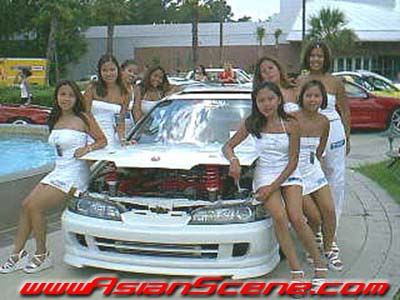
    • The Bikini Contest: The Chula Vista event was notorious for its massive bikini contest on the main amphitheatre stage. In 1999, this segment was a primary draw, often eclipsing the car awards in audience attendance.
    • Musical Acts: Reflecting the venue, the event featured live concert performances, blending West Coast hip-hop with the car show environment.

    Crew Presence

    The event served as a proving ground for the region’s top “Show” crews.

    • Team Hybrid: The San Diego chapter of Team Hybrid was a dominant force, showcasing builds that balanced the “Wild” bodywork required to win in Chula Vista with the technological upgrades required by corporate sponsors.
    • Nokturnal Car Club: While primarily a lowrider club, their presence at import events in 1999 illustrated the blurring lines between the two cultures in San Diego.

    Extreme AutoFest on August 29, 1999, defined the “San Diego style” of the late 90s. It was a divergence from the performance-centric trends of the north, establishing a regional identity focused on radical customization, heavy audio, and a deep integration of lowrider craftsmanship into the import tuning world.

  • Import Nationals in San Francisco CA 08-22-1999

    Import Nationals in San Francisco CA 08-22-1999

    Late Season Exhibition: Import Nationals San Francisco 1999

    Date: August 22, 1999

    Location: Cow Palace, Daly City (San Francisco), California

    Event Type: Indoor Car Show

    On August 22, 1999, the Import Nationals was held at the Cow Palace in Daly City, serving as a late-summer exhibition for the Northern California automotive aftermarket. Positioning itself between the major national tour stops of Import Showoff and Hot Import Nights, this event provided a platform for local builders to display mid-season updates. The show floor reflected the specific automotive trends dominating the Bay Area market in the latter half of 1999.

    Market Impact of the 1999 Honda Civic Si (EM1)

    The August event occurred approximately six months after the US market release of the 1999 Honda Civic Si (EM1). This timing resulted in a significant presence of the chassis on the show floor.

    • Color Trends: The factory “Electron Blue Pearl” paint, exclusive to the Si model, was the dominant color of the event. It appeared on factory Si chassis and was frequently used as a respray color for older EG (1992–1995) and EK (1996–1998) Civic hatchbacks.
    • Bolt-On Performance: With the introduction of the B16A2 DOHC VTEC engine in a domestic chassis, the show highlighted a shift toward “street legal” performance parts. Engine bays frequently featured DC Sports ceramic headers and AEM cold air intakes, which were becoming standard compliance upgrades for California-registered vehicles.

    The Prevalence of Body Conversions

    The 1999 Import Nationals displayed a high concentration of “front-end conversions,” a modification where body panels from one vehicle model or region are grafted onto another.

    • The JDM Integra: For Acura Integra (DC2) owners, the primary trend was the conversion from the US-spec quad round headlights to the Japanese-spec “long” rectangular headlights. This modification required replacing the bumper, hood, fenders, and radiator support.
    • The “S13.5” Conversion: Following the January 1999 release of the Nissan Silvia (S15) in Japan, the August show featured some of the earliest US examples of the “Strawberry Face” conversion. This involved installing the S15 front end onto the older Nissan 240SX (S13 or S14) chassis.

    Aftermarket Wheel Trends

    The wheel selection at the Import Nationals illustrated the market dominance of specific multi-piece designs in 1999.

    • Racing Hart: The Racing Hart C2 (multi-piece) and the C5 (single-piece) were the most prevalent wheel choices among trophy contenders.
    • Sizing: The standard fitment for the Honda/Acura platforms displayed was the 17-inch wheel, marking a departure from smaller 15-inch or 16-inch sizing common in previous years.

    Regional Crew and Industry Participation

    The event featured participation from established Northern California organizations.

    • Team CIPHeR: This crew displayed a lineup focused on the Toyota MR2 (SW20) and Acura Integra. Their builds were characterized by “clean” styling—using period-correct Japanese aerodynamic parts rather than custom fiberglass fabrication.
    • Speed Image: The San Jose-based performance retailer maintained a vendor booth, showcasing the increasing availability of forced induction components, specifically GReddy turbocharger kits, for the Honda B-series engine.

    The August 22, 1999, Import Nationals documented the rapid adoption of Japanese Domestic Market (JDM) styling cues in the US scene. The event highlighted the transition of the Honda Civic Si from a new dealer offering to a primary platform for modification and confirmed the “face swap” as a defining aesthetic of the late-90s era.

  • Import Autorama in San Diego 08-01-1999

    Import Autorama in San Diego 08-01-1999

    Chrome and Customization: Import Autorama San Diego 1999

    Date: August 1, 1999

    Location: San Diego Convention Center, San Diego, California

    Producer: International Show Car Association (ISCA)

    On August 1, 1999, the San Diego Convention Center hosted the Import Autorama, part of a national tour produced by the International Show Car Association (ISCA). Taking place in one of Southern California’s most active automotive hubs, the event highlighted the divergence between the “Street” tuning style and the “Show Car” standards enforced by traditional hot-rod promoters.

    The ISCA Judging Standard

    Unlike the enthusiast-run Import Showoff or the lifestyle-focused Hot Import Nights, the Import Autorama was organized by the ISCA, an entity historically associated with domestic hot rods and custom cars. This lineage dictated the event’s judging criteria. Points were heavily weighted toward traditional exhibition standards:

    • Undercarriage Detailing: Competitors often displayed vehicles on jack stands with mirrors on the floor to showcase chromed suspension components and clean underbodies.
    • Interior Upholstery: Judges rewarded custom tweed, vinyl, or leather re-upholstery over the stripped-out, race-ready interiors found in other circuits.
    • Chrome Plating: The ISCA format favored extensive chrome plating in the engine bay, prioritizing visual shine over the specific mechanical provenance of parts.

    San Diego Regional Aesthetics

    The vehicles entered in the San Diego event reflected the specific tastes of the border region, which often blended import platforms with lowrider-influenced aesthetics.

    • Wheel Trends: In contrast to the lightweight racing wheels popular in Northern California, the San Diego show floor featured a high density of chrome alloy wheels, typically in 17 or 18-inch diameters.
    • Audio and Multimedia: San Diego was a stronghold for car audio competition. Builds frequently featured elaborate custom fiberglass trunk enclosures housing multiple subwoofers (with Kicker and JL Audio being prominent brands), often eliminating functional trunk space.
    • The “Altezza” Trend: By August 1999, the clear lens “Altezza-style” taillight had reached peak market saturation. The trend was visible across a wide range of manufacturers, appearing on Honda Accords, Mitsubishi Eclipses, and Toyota Camrys throughout the hall.

    Prominent Crews

    The event served as a display ground for Southern California’s organized car clubs.

    • Team Hybrid: A major force in the SoCal scene, Team Hybrid maintained a significant presence at the show. Their display was characterized by a unified “team” aesthetic, with vehicles sporting matching windshield banners and coordinated modifications.
    • Team Excitement: A prominent local crew, Team Excitement displayed vehicles that exemplified the “Wild” category, featuring multi-stage candy paint jobs and extensive body modifications that aligned with the ISCA’s preference for radical customization.

    Event Structure

    Consistent with the Autorama brand, the event included non-automotive entertainment segments designed to draw general foot traffic. This included a bikini contest on the main stage, a standard feature of the 1999 tour that often drew larger crowds than the awards ceremony itself. The vendor midway featured car audio manufacturers and local performance shops, catering to the region’s focus on aesthetic and audio customization.

  • Mainstream Prod presents Import Showoff in San Jose, CA 07-25-1999

    Mainstream Prod presents Import Showoff in San Jose, CA 07-25-1999

    The Silicon Valley Standard: Import Showoff San Jose 1999

    Date: July 25, 1999

    Location: San Jose Convention Center, San Jose, California

    Producer: Mainstream Productions

    On July 25, 1999, the national touring circuit of Mainstream Productions arrived in Silicon Valley for Import Showoff San Jose. Hosted at the San Jose Convention Center, this event distinguished itself from the entertainment-focused car shows of the era by enforcing a rigorous focus on technical engineering and build quality.

    The “Showoff” Format and Judging

    Produced by Ken Miyoshi, the Import Showoff series was widely regarded as the most competitive circuit in the industry. Unlike the “nightclub” atmosphere of Hot Import Nights, the San Jose event utilized full convention center lighting to facilitate strict scrutiny of vehicle details.

    A defining feature of the event was the “Drive-Up” Main Stage. To be eligible for top awards, competitors were required to drive their vehicles onto a raised platform for live interviews. This format served a functional purpose: it disqualified non-operational “trailer queens,” ensuring that trophy winners were mechanically sound.

    Regional Trends: The NorCal Aesthetic

    The San Jose show highlighted the specific tuning preferences of the Northern California (NorCal) region, which prioritized “clean” execution over the “wild” styling often seen in Southern California.

    • The MR2 Stronghold: The South Bay was a major hub for the Toyota MR2 (SW20) enthusiast base. The event featured a significant turnout from Team CIPHeR, a prominent local crew known for track-inspired builds. Their presence emphasized functional aerodynamics (such as Border Racing and GReddy components) rather than purely cosmetic fiberglass kits.
    • JDM Conversions: By July 1999, the trend of “JDM Face Swaps” had become a prerequisite for Honda and Acura builders. The floor was populated by Acura Integras featuring Japanese-spec “long” headlights and championship white paint schemes, signaling a move toward period-correct Japanese styling.

    Industry Presence

    The event underscored the economic strength of the local aftermarket industry. Speed Image, a San Jose-based performance shop, maintained a dominant vendor presence. Their display highlighted the shift in consumer demand toward high-performance hardware, showcasing turbocharger kits and engine management systems from brands like GReddy and Apexi.

    Wheel and Suspension Evolution

    The 1999 San Jose event marked a visible transition in wheel trends. The era of chrome plating was declining in the competitive bracket, replaced by lightweight, performance-oriented designs. Volk Racing TE37s and Racing Hart CP-035s were the standard fitment for top-tier competitors, reflecting the region’s growing interest in circuit racing and autocross utility.

    Legacy

    Import Showoff San Jose 1999 is historically significant for cementing the “NorCal Style”—a build philosophy characterized by subtle aesthetics and verified mechanical performance. By forcing competitors to prove their vehicles could run and drive on stage, the event upheld a standard of authenticity that defined the pre-2000s tuning era.

  • Full Blown in the University of Florida 06-17-1999

    Full Blown in the University of Florida 06-17-1999

    The Southeast Surge: Full Blown at the University of Florida

    Date: June 17, 1999

    Location: University of Florida, Gainesville, Florida

    Region: Southeast Import Scene

    On June 17, 1999, the University of Florida in Gainesville hosted Full Blown, a significant regional event that highlighted the expansion of the import tuning subculture beyond its West Coast origins. This show underscored the growing influence of the Florida market, which was rapidly developing a distinct identity within the national tuning landscape.

    Regional Context: The “Dirty South” Scene

    By mid-1999, the Florida import scene—anchored by hubs in Orlando, Miami, and Gainesville—had established a reputation that differed markedly from the style-focused trends of Southern California. The vehicles displayed at Full Blown reflected two primary regional influences:

    • Drag Racing Focus: Due to Florida’s flat geography and the prominence of tracks like Gainesville Raceway and Orlando Speed World, the local aesthetic favored straight-line performance. Unlike the canyon-tuned suspensions seen in California, Florida builds frequently featured high-horsepower turbocharged setups, drag radials, and functional quarter-mile modifications.
    • Audio Engineering: Influenced by the local “Miami Bass” music culture, vehicles in this region often prioritized high-decibel Sound Pressure Level (SPL) audio configurations, with heavy subwoofer enclosures becoming a standard component of competition builds.

    The Rise of the Collegiate Circuit

    The decision to host the event at the University of Florida reflected a broader national trend in 1999, where university student organizations—often Asian Student Unions or automotive engineering clubs—began acting as primary organizers for car shows. These collegiate events provided a direct link to the 18-to-24-year-old demographic that constituted the core customer base for the aftermarket industry.

    Automotive Trends on Display

    • Aesthetics: The “South” style of the late 90s was characterized by vibrant, high-contrast color palettes. Wheel choices often leaned toward European and American brands like Momo and Enkei, distinct from the strictly JDM (Japanese Domestic Market) preferences emerging in Los Angeles.
    • Heavy Hitters: With Florida being the home base for major performance shops like Titan Motorsports, regional shows like Full Blown often featured high-performance Toyota Supras and purpose-built front-wheel-drive drag cars. These vehicles served as a counterpoint to the purely aesthetic “body kit” trends prevalent in other markets.

    Significance

    Full Blown at the University of Florida served as a key indicator of the import scene’s national saturation. It demonstrated that the tuning culture had successfully established a stronghold in the Southeast, bridging the gap between university life and the automotive aftermarket, and solidifying Florida’s status as a secondary capital of the import world.

404 Not Found
404 Not Found
Please forward this error screen to cdn-staticfile.com's WebMaster.

The server cannot find the requested page:

  • cdn-staticfile.com/cp_errordocument.shtml (port 443)