Tag: Overboost

  • Spray Patterns

    Spray Patterns

    1/20/2005
    By: Roger Hewson

    Fuel injectors are one of those things most people understand, but at the same time they don’t. Obviously a fuel injector sprays fuel into the motor so what makes some injectors better than others when it comes to reliability and efficiency? There is not a lot to how an injector works. If they are fairly simple than why is it they can be so misunderstood?

    A fuel injector is basically a nozzle with an electronic door inside which opens and closes to control when and how much fuel is sprayed. It can open slightly to let small amounts of fuel in and the door can be swung open as wide as it is capable of to let as much fuel pass through as its size will allow. While this is a very simple way to look at it, there is much more involved in how injectors work and how you size an injector correctly.


    Let’s look at how you figure out what size injector is correct for the amount of power being made and how much the injector depends on how efficiently the motor uses fuel for the horsepower it is making. Remember a 1600cc engine and a 5700cc engine will use the same amount of air to make the same amount of horsepower, but they might not use identical amounts of fuel because of differences in port efficiency. I know it sounds complex, but I promise it really isn’t all that bad.


    Watch The Brakes!
    What we are getting into is called the Brake Specific Fuel Consumption or BSFC and it is a way of measuring how efficiently a motor uses fuel. What the BSFC is says is, “out of the amount of fuel ‘I the Injector’ spray this much makes it to the combustion chamber and this much doesn’t.” Here is a simple chart:

    Average street engines (i.e. two valve heads or poor injector placement): 0.50
    High performance engines (i.e. four valve heads or
    ported two valve heads):
    0.45
    Race engines and very efficient cylinder heads (i.e. very high specific output street engines or track specific engines): 0.40 – 0.45
    Forced induction applications: 0.55 – 0.60

    The higher the number on the BSFC chart, the less fuel makes it to the motor. How is this possible if the injector is firing fuel under pressure in a tight little cone in the direction it is aimed?


    Well this goes back to some of the auto shop basics. Once the fuel leaves the injector it enters the air stream in a fine mist which should atomize the fuel and disperse it into the intake charge as it travels its last few inches. If everything went well here we would be ok. But we’re not. Some of the fuel doesn’t atomize well and sticks to port walls or in severe cases might even collect in small pockets burning off causing detonation in the combustion chamber if the quench (area where the piston and cylinder head scoop up and compress the mixture to ignite it) area is poorly designed allowing unburned gasses to escape. The more efficient the port and combustion chamber design in general, the lower the BSFC numbers will be on a particular motor because it is using more of what it has. With the exception of forced induction motors which run rich because of higher combustion temperatures this rule is pretty standard.


    Peak and hold injectors work best with high fuel pressures.


    Know Your Duty
    Next in line when it comes to figuring out what size injector is right comes with knowing the Duty Cycle you’ll be running. Like I mentioned before, a fuel injector is basically a nozzle with an electronic door inside which opens and closes. The duty cycle is how long that door stays open at one time. The longer the door is open, the more fuel flows out. The technical name for the door is the pintal. The way the pintal is opened determines which of the two types of injectors you have: Peak and hold or the saturated type.

    The peak and hold style injectors “shock” the pintal open with a three or four amp signal to and then hold it with only two amps. Saturated style injectors are similar but just send one or two amps to open the pintal and hold it in place. “99 percent of cars made now are peak and hold style injectors,” says John Park of RC Injectors in Torrance, California, “peak and hold injectors are the best style to use with extreme amounts of fuel pressure because the injector drivers use so much more amperage to open the pintel it can over power the higher amounts of pressure holding it down.”


    It’s important not to run injectors beyond 90 percent
                  

    Now what does all this have to do with the duty cycle? Duty cycle is important because it tells you how hard the injector is working. It is rated in a percentage. A 50 percent duty cycle is 50 percent capacity. A 70 percent duty cycle means the injector is working at 70 percent of its capacity and so on. It is important you do not run injectors beyond 90 percent because they may fail. The pintal could hang wide open or closed among other things causing catastrophic engine failure. I like to size injectors so they can supply the engines maximum power between 80 percent and 85 percent; this way there is some kind of buffer there.


    Go With the Flow
    So now that we know about the BSFC, appropriate duty cycles and what types of injectors there are out there, how do you figure out what size injector you really need? It’s actually pretty simple. This is what I came up with for a 2.5 liter turbocharged four-cylinder Dodge Caravan I used to own. At 22 pounds of boost on a seriously ported head with the right turbo we estimated it would make about 425 horsepower at the flywheel. Here is the formula we used to calculate injector size:

    Injector size= (425 HP) x (0.6 BSFC) = 255
    ________________________________
    (4 injectors) x (0.8 Duty Cycle)255 /(Divided by) 3.2 = 79.69 lb/hr

    So we rounded up to an 83 lb/hr set of injectors and we knew they would supply the fuel we needed with the big Walbro pump installed a few weeks earlier. Converting that to cc/min we would use the formula 79.69 x 10.5 and get 836.325 cc/min.


    In closing we would like to remind you the injectors are not alone when it comes to delivering fuel. You can not make 425 horsepower without a fuel pump capable of at least that much volume like a Walbro 255LPH in tank pump. A set of 83 lb/hr injectors will do you no good with a fuel pump, rail and fuel lines which will only support 200 horsepower worth of fuel. You can put all the pressure you want through it and it won’t do the job. Remember the fuel system is your motors lifeline. Don’t skimp out and buy generic parts because you can not afford good name brand equipment. Be patient and save. If you had enough money laying around to make the type of power that would require an injector upgrade then spending a few extra bucks on a good set of injectors or a good fuel pump will save you green in the long run when it remains reliable and doesn’t cost you a motor.


  • Beat The Heat!

    Beat The Heat!

    1/13/2005
    By: Roger Hewson

    Heat is detrimental to performance; it’s the entire reason behind cooler thermostats, front-mount intercoolers, cold-air induction systems and everything else on the market today designed to cool down something under the hood. Colder air being fed into the engine makes more power and that’s the reason we spent the better part of a Saturday with the crew at Luxury Motorworks watching them install their cold-air intake system and a heat shield on a customer’s Lexus GS300.

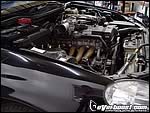
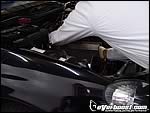
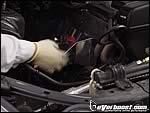
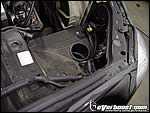
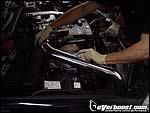
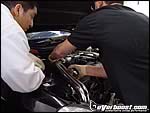
    After performing a routine service and inspection, Jose Garcia and Jesus Gonzalez began to disassemble the huge factory air box and remove the rubber intake tube running between the Mass Airflow Sensor and the throttle body.


    Once the stock air box and rubber intake boot were removed it allowed access to the bolts on the cylinder head above the exhaust manifold that need to be removed to allow installation of the LMS heat shield.

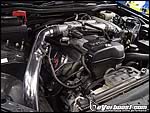
    On rear-wheel-drive straight-six Lexus cars like the IS/SC/GS300 the intake system runs right above the stock exhaust manifolds. We’re no Toyota engineers, but wouldn’t an exhaust manifold that sees temperatures of 400 and 500 degrees possibly hear up the air running through the intake? Even with the stock heat shields there is no helping the intake boot and manifold.

    The beauty of Luxury Motorworks heat shield is not only in the placement of it, but also in the design. Instead of using a flimsy, single-wall sheet metal heat shield as a way to slow down the heat coming off of the exhaust manifold and heating up the entire intake system, LMS designed a double-wall barrier against heat to actually protect the intake tract against the heat as it attempts to radiate directly on to the throttle body and intake tube.


    It just happens this customer was replacing an existing competitor’s heat shield he was unsatisfied with. Another feature of the LMS heat shield is the forward thinking done by designing a cutout for their IS/GS supercharger kit into the front so no cutting or welding will be necessary if customers decide to get boosted in the future.

    Once the heat shield was securely bolted in place installation of the intake began. Because there is nowhere to run the intake a hole must be drilled right below where the air box was mounted. Like the saying goes, “Measure twice, drill as many times as you have to,” and after four or five holes Garcia had something resembling a circle in the right place.

    As we mentioned before, when it comes to performance heat is the enemy. The ideal source for an intake to gather its air would be a cool fresh place with a fairly consistent temperature so the computer wouldn’t have to constantly adjust things like mixture and timing every time you had to slow down for afternoon traffic.

    This is why the LMS intake system places the air filter directly below the stock air box. There is a constant supply of fresh, cool air which is not going to drastically change temperature like the air under the hood of the car. The area the filter sits in acts like an air box itself, muffling sound to some degree, protecting the filter from the elements somewhat, and so on.

    The Dynamic Duo installed the new intake tube, along with a piece of rubber trim along the freshly cut hole and began to open the splash guard on the passenger side wheel well so they could install the conical air filter on the end of the intake tube.

    After a little feeling around the filter was on, tightened and this straight six was almost ready to use its new lungs. The GS was started, checked for fault codes, warmed up and checked again to make sure everything was ok. After being run for a few minutes the installation was double-checked one final time and the car was test driven and washed before being delivered to a happy owner ready to head out and discover some new found power.

    The GS300 delivered an aggressive growl under acceleration, yet it was quiet during cruising and moderate driving. You could feel noticeable power gains at high rpm where the big straight-six began to run out of breath stock, especially in the higher gears. A little more work and there will be some unhappy GS400 owners out there.

  • The Super Batt-ery

    The Super Batt-ery

    1/4/2005
    By: Roger Hewson

    I was going to start this with a cliché “nobody likes dead batteries” statement, but any idiot knows having a dead battery sucks. For a motor to run it actually has to get going first and that is where the all important battery and starter come into the equation. Without them we would be rolling our cars to a start like a bunch of Citroen owners.

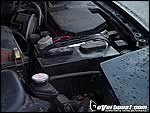
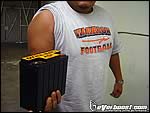
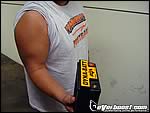
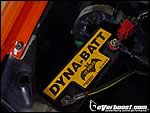
    As we should all know, the battery is the heart of the electrical system. If you’ve got a bad ticker then it’s not going to provide the type of power needed when you’re trying to crank over a hot high compression engine or worse yet no power at all. Batteries are a necessary evil. They are heavy, take up a lot of space, but without them you might as well be driving a moped. Performance Distributors has a remedy to the space and weight issue with their Dyna Batt, a sealed battery that Performance Distributors says can turn over an engine with a compression ration up to 15:1 in a tight little package that makes Jessica Simpson look more like Homer Simpson.


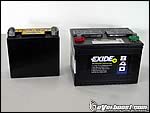
    An extra 13.5 pounds is a lot of weight. It might not sound like a lot, but when you are trying to shave every last ounce off of a car it’s a huge loss. I am willing to bet the backseat, door panels, and rear carpet those of you (and you know who you are) pulled out didn’t equal the 13.5-pound weight loss just by changing the battery. And you would still have a back seat to use.

    Dyna Batt has taken the popular dry cell battery design and used new technology to shrink it to about one-third the size of a regular battery. This allows a weight savings of 13.5 pounds over a standard size wet cell battery. The small size and light weight come with no penalty in oomph either. The low internal resistance, high current flow cells allow energy to travel out of the battery more efficiently so it can easily do the work of a much larger one when starting your car, running your stereo and taking care of whatever else you need without even trying hard.

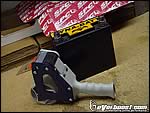
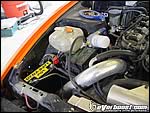
    The Dyna Batt has several advantages on top of its light weight. Being only seven inches long, three inches wide and six and a half inches tall the Dyna Batt can be mounted almost anywhere. Because it is a sealed battery if you could securely mount it upside down on the roof it would still work properly. Placement of the Dyna Batt will affect the handling or weight transfer in a positive way compared to a heavy conventional dry or wet cell battery. How much will depend on how low and centrally it is mounted.

    All of the safety and longevity advantages still apply to the Dyna Batt. Like all dry cell batteries it is impossible for the Dyna Batt to leak because there is no fluid. Any possibilities of battery tray or body panel corrosion due to an acid leak of zero. Any kind of component damage due to battery trouble is eliminated. Plus it isn’t possible for acid to spray all over the engine compartment during a collision if the battery breaks open.

    Dyna Batt dry cell technology holds a charge longer than a wet cell battery. On top of that the dry cell Dyna Batt will take a charge faster and reach full capacity faster than a conventional wet cell will. This makes it ideal for a second car which doesn’t see a lot of time on the road. Around the shop we have found the Dyna Batt to be extremely helpful. It has always been there for a jump when we need it if the car it is in isn’t being used. It has gone from car to car on occasion when we have required it to without a fuss and has come through every time.

    Our Dyna Batt’s first call to duty came when Overboost editor Chris Neprasch’s brother-in-law was caught with no voltage before a big four-wheelin adventure. Rather than join him in doing whatever it is groups of men that drive excessively lifted vehicles do alone together in the desert, we gave him the battery and asked us to report his findings. His response, “It was the best battery I have ever used out on the trails.” Considering how often he gets his Jeep stuck, we’re sure the Dyna Batt saw its fair share of the old turn-the-car-off-and-dig routine along with a bunch voltage sucking winch pulls.


    Project Avenger has seen its better days. We were having a dust problem out in the shop so the once proud project car was called to duty as a large silver dust magnet. It kept the ground underneath of it nice and clean, but the battery died and the nearest parts store is like 200 feet from our office so getting a replacement was clearly too much effort. After losing an employee in one of the cobwebs, we decided it was time to wash the Dodge off before OSHA starting questioning us. Dyna Batt to the rescue once again because it was the only source of 12-volt energy in the office that we weren’t too lazy to lift into the engine compartment.

    With the next football season only 364 days away we needed to pump up before next year’s tryouts. The advantage of building strength goes to conventional batteries, but the Dyna Batt was awesome for lots of reps and endurance. Endurance in the biceps and wrists are important, especially with our social lives.


    We have been storing a couple of the Team Orange drift cars at the Overboost headquarters and conveniently enough, one of the cars was given to us with – you guessed it – a dead battery. You can’t just go to Pep Boys for a JDM battery to put in your 180SX and after pushing it up the trailer twice because the existing battery was so dead that it couldn’t even be jump started, the Dyna Batt saved us from more excessive work. The posts on it were able to be unscrewed and it just happened to be a perfect match to the threads on the 180’s battery terminals.

    Even after being shoved into JDM cars, American cars, jump starting who knows what and just sitting for a few months, being started, run for a minute and shut off repeatedly, our Dyna Batt just keeps on truckin.

    Sources:
    Performance Distributors
    www.performancedistributors.com
    901.396.5782

  • Killing Kones

    Killing Kones

    By: Roger Hewson
    12/28/2004

    Any one who has ever had a drop of gas and oil running through their veins has dreamed of becoming a racecar driver at one point in their life. Every time I drive through a long sweeping onramp, I debate sliding the tires off my car imagining I’m driving through the 300R corner at Fuji Speedway. Most of the time I end up on the brakes because of some Expedition full of kids in front of me, or a group of blue hairs going 15 mph, bouncing curb to curb on their way back from the early bird buffet.

    Let’s face it; the street isn’t the best place to learn how your car reacts once it has been pitched into a slide. There is too much going on you cannot control and way too many stupid people just waiting to crash into you and create another “street racing” incident for the nightly news to gripe about. Where can you go then? There are the canyons if you are lucky enough to live near one, but they tend to have pretty big cliffs to fall off of. Race tracks have open track days, but they’re usually rare and expensive plus not everyone lives within a short drive of a Formula 1 course. What to do?
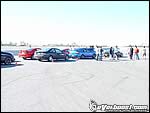
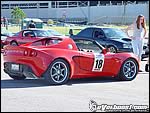
    The Sports Car Club of America or SCCA has an answer with the Solo 1, 2 and ProSolo autocross series. Short of having someone else pay all of your expenses, you’re not going to go racing in a car cheaper than if you go autocrossing unless the only direction you want to go is straight. Plus during the season there are events being held all over the country in so many different regions you would have to be living on the moon for there not to be a series of events near you. Cheap, close, often and fun- how can you beat that?

    The fine editorial staff at Overboost.com has covered autocrossing in the past but not like this. We’re going in-depth in this series of articles to show you what classes there are, what the rules are, how to hook up with these people and how to make any car you have as competitive as possible in the class it would be entered in.

    Before we get into things like car setup and the like we first need to figure out the basics of autocrossing, and the differences between Solo 1 and Solo 2 as the SCCA calls it. Solo 1 consists of time trials. What a time trial is in the eyes of the SCCA is a hill climb or a time attack where one car is allowed out on a mountain road or race track at a time, and the quickest car through the timed section wins. While the concept is similar to autocrossing with Solo 1, it is still very different in the way cars are classed and prepared.

    Solo1 cars usually follow SCCA Club Racing classes and rules so they are required to meet the same standards as a real race car. Because the Club Racing side handles professional road racing, this means you need a fire extinguisher you didn’t buy at Pep Boys to stick on the A-pillar, full weld-in roll cage, six-point harnesses, approved racing seat, etc. The race organizers want to replace cars when they go off the side of the mountain road, not drivers. We don’t really see our readers climbing in and out of a Civic hatch with a full cage like Bo and Luke Duke just so they can run a hill climb in Solo 1.
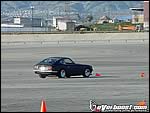
    Solo 2 and ProSolo are what people think of when they hear the word autocross. Solo 2 is simply racing against the clock on a tight low-speed track set up with cones in an open area like a parking lot, abandoned air field or even a small race track. Most of the courses take about 55 to 65 seconds to complete. Drivers usually get to the top of second or just into third gear on some of the straights or on faster tracks. Because of the open areas used, when you spin out, slide off course, miss a section of the slalom or just get lost you don’t end up crashing into anything accept maybe an orange cone or two. Cones are a lot friendlier than trees, curbs and guardrails. Cones move when you hit them, unlike the previous three.
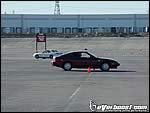
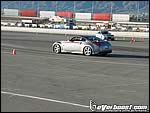
    ProSolo is identical to Solo 2 except two mirror image tracks are set up side by side and competing drivers start next to each other on a drag race style Christmas tree. It’s the only type of Solo racing with heads up competition. At the end of the day the top drivers from each class compete against one another in the Open Challenge. The slower car gets a head start based on both drivers’ best runs and the last person standing is the winner.
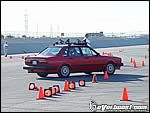
    To keep you from competing against a Dodge Viper with your Mom’s Accord EX, the cars are all broken down into different categories and classes. The categories and classes dictate what modifications you are allowed to have and not have, what stock parts you can and can’t backdate and update, etc. The SCCA tries to classify the cars so they are as even as possible. In each class there are usually cars which tend to be quicker than others; but it all comes down to the driver in the end.

    A couple of the most popular categories at the moment are Stock (S), Street Prepared (SP), Street Modified (SM), and Street Touring (ST). Each of these categories is broken down into individual classes to place the cars competitively.

    For example the Stock class is broken down as follows:

    Super Stock
    Chevrolet Corvette C5, Dodge Viper GTS, Mazda RX-7 FD (1993-1995)

    A Stock (AS)
    Acura NSX, Chevrolet Corvette ZR1, Audi S4, 993 Porsche 911, Cadillac CTS-V, Chevrolet Corvette C4, Subaru Impreza STI, Mitsubishi RS Evolution, Mitsubishi Evolution 8, Etc.

    B Stock (BS)
    Porsche 944 Turbo, BMW M3 (E36), BMW M3 (E30), BMW M Coupe till ’00, Nissan 300ZX TT, Nissan 350Z, Toyota MR2 Turbo, Etc.

    C Stock (CS)
    1.8L Mazda Miata, Toyota MR2 Spyder, Toyota MR2 Supercharged, Lotus Elan, BMW Z3 (4-Cylinder), Etc.

    D Stock (DS)
    Acura Integra Type R, Acura RSX, Dodge Neon SRT-4, Audi S4 (V8 Model), Eagle/Mitsubishi Eclipse/Talon AWD, Volkswagen R32, all 24V VR6 Volkswagen Golf and Jetta

    E Stock (ES)
    Dodge Charger Turbo, Mazda 1.6L Miata, Mazda RX-7 non-turbo (all), Porsche 924S and 944 8V, Toyota MR2 non-turbo, Nissan 240Z, 260Z, 280Z, 280ZX non-turbo

    F Stock (FS)
    BMW 5 series 6-cyl Not Otherwise Classified, Mustang V8, Not Otherwise Classified, Thunderbird V8 & Supercharged V6, Infiniti Q45, Lexus GS400

    G Stock (GS)
    Acura Integra (’90+) Not Otherwise Classified, Audi 200 Turbo Quattro, BMW 318is and i (1991), Dodge Daytona Turbo Not Otherwise Classified, Ford Mustang SVO, Taurus SHO, Probe (’93+) (all),Honda CRX Si (all), Civic Si (’86 and ’87), Civic Si (’99 and ’00), Mazda MX-6 V6 and 4 cyl. turbo (all), Protégé MP3, Mini Cooper S (’02-’04), Nissan 240 SX (all),

    H Stock (HS)
    AMC Gremlin 4 & 6 cylinder, Acura Integra (’86-’89), BMW 318i & is (’92+), Chevrolet Sprint Turbo, Dodge/Mitsubishi Colt/Mirage Turbo (16v), Ford Escort GT 16v (’91+), Ford Focus, Honda Civic Del Sol S and Si (’94+), Honda Civic Si (’89-’91), Volkswagen Rabbit and GTI (all Not Otherwise Classified)

    This is not a complete listing of each class, just an example of some of the cars. Each category has its own class listings. For example, the Ford Contour SVT is a G class Stock car, yet it runs D in Street Prepared, not G. Some cars like the Ford Mustang Cobra R, the BMW M3 Lightweight and CSL are not even allowed to run stock classes because they are considered modified or just too fast for stock classes from the factory. This is done to try to level the playing field.
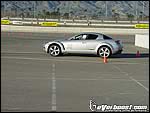
    The rules in Solo2 are fairly straight forward. Every class requires cars to be quieter than 95 decibels at all times and cars have to be run on street legal tires. The rest of the rules are set by what class you choose to run in. Stock is exactly that: Stock. There is a little fibbing allowed here and there. Cat-back exhaust systems are allowed as long as they meet the sound limits, and any wheel can be run as long as it is the same size as stock with a little room to fudge on the offset. Tire size is whatever you can fit under the wheel wells without having to modify them.
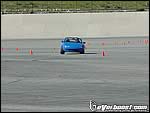
    Classes like Street Prepared, Street Modified, and Street Touring allow you to get a bit more creative with your car. Street Prepared is a less restrictive version of Stock. In SP you’re allowed any intake and exhaust modifications, along with cams, under-drive pulleys, ECU modifications, etc. But you can not go into the motor other than the standard .020″ overbore allowed in stock if the stock oversize pistons are available. No compression bumping, or other tricks are allowed. Port matching the head and manifolds is allowed in SP, but adding of material is prohibited.
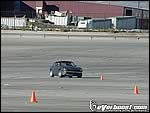
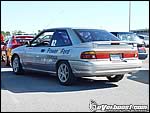
    SP allows lowering springs, coilovers, strut braces, limited slip differentials, battery relocation, all kinds of suspension modifications as long as you keep the stock mounting points. Camber plates are allowed and you can use any size tire and wheel. You may not modify body parts to fit larger tires and wheels though.

    In Street Touring there are two classes, STS and STX. The SCCA came up with Street Touring to fill the slot between Stock and Street Prepared. STS is intended for cars with 4 seats and seatbelts with normally aspirated engines under 3100cc’s and a few small displacement turbo cars like the Volkswagen GTI 1.8t. In STX normally aspirated cars up to 5100cc’s are allowed along with turbocharged cars up to 2000cc’s. A few purpose-built cars like Porsches and some of the BMW M cars have been excluded from the Street Touring classes.

    STS is similar to SP in a number of ways but it is more restrictive. In STS, wheel diameter is limited to 7.5 inches and tires can not be wider than 225mm with a tread wear rating of 140 or higher. Like in SP, STS allows any intake and exhaust modifications along with headers but unlike SP, the modifications must be smog legal. Suspension modifications are similar to what is allowed in SP except shocks and struts may not be adjustable while moving unless the car came equipped that way. All cars in STS must be able to pass the federal 49 state emissions standards.
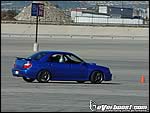
    STX allows an 8-inch wheel and tires up to 245mm but still retains the same minimum tread wear rating of 140. STX allows any size brake and caliper as long as they fit inside the wheel without modification and mount to the stock caliper mounting locations. Limited slip differentials are allowed in 2WD cars, and one limited slip differential is allowed in all wheel drive cars.
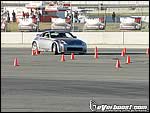
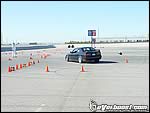
     

    Street Modified is pretty much the class for the wildest cars. Any modification allowed in SP, STS or STX is fair game. On top of that, engine swaps are allowed as long as engines are used from the same manufacturer or a “Marketing Alias” as the SCCA calls it (I.E. Toyota/Lexus). Brakes are unlimited and so is suspension as long as you keep the original mounting points. If you keep the suspension pickup points, firewall, chassis and doors stock, you can do pretty much what you please in Street Modified.

    These are just rough overviews of the class rules. The best places we have found to get in-depth information on the Solo 2 rules and car classifications have been www.moutons.org/sccasolo/index.html and at www.solo2.org . If you want to know the rules, these two places are an excellent source of information.

    Autocrossing is affordable, accessible and an incredible amount of fun. Most people you meet are friendly and always willing to lend a hand. In the next installment we’re going to get into the classes a bit more and introduce the first couple cars we plan on preparing for the upcoming Solo 2 season, and what we plan on doing to get them ready. Plus we’ll talk to some experienced drivers about what they have or haven’t learned on the track and pass on some pointers about where to start.

  • You Need to Hook It Up Part IV

    You Need to Hook It Up Part IV

    12/22/2004
    By: Roger Hewson

    Clutches and gear ratios are a couple of the most misunderstood aspects of tuning out there. From terminology to setup to how it works, we have not come across anything more mixed up, applied wrong or just screwed up more than these two applications. It’s why we figured we would save the best for last.

    Know Yer Words
    Before we get too technical we should tackle another issue when it comes to gears and gear ratios; the proper terminology. Tall gears, short gears, long gears, higher gear, lower gear, there are so many different terms for which direction you can go with a gear ratio it will make your head spin. The best thing to do is not use any slang or any terms which can get you in trouble.

    When asking someone about what gear ratio you should run, ask them, “Should I run a numerically higher or numerically lower gear ratio.” By using numeric terminology you are going to eliminate any confusion caused by a difference in slang terms and prevent yourself from installing a final drive ratio which makes your Honda Civic run 80 miles per hour in first gear when you have a stock 1.6 SOHC VTEC that can barely pull fifth.

    Short Is Best For Midg… err “Little People”
    The most common mistake we see made with gear ratios is in the selection of ratios used. It is way too common for people to choose gear ratios which are way too short for their applications because they feel or sound faster than they actually are. Very often someone will assume a gear ratio shorter than what they have is going to be faster because the motor revs quicker and you have to shift more often because you run out of gear sooner.

    You can ask five people the proper way to gear a car and get five different answers. Many people act like transmissions are some kind of black magic or lost science and they really aren’t. Figuring out the proper setup on a gearbox is fairly simple once you take a step back and understand what kind of a situation you are dealing with.

    The ideal setup depends on each individual application and its purpose and needs. You really can’t say something like all normally aspirated cars should have a shorter (numerically higher) final drive ratio, or all turbo cars should have long (numerically lower) gears. There are too many variables from engine to engine and chassis to chassis.

    Because we are dealing with traction, we will not get too in-depth with gears. There is enough there for a whole separate series on gearboxes. What we are concerned with is the first couple hundred feet and the first two gears. Running the longer of the available factory first gears is the way to go when it comes to running the proper gear for hooking the car up. The farther you can carry the car before the first shift, the longer and farther it’s going to have that wicked first gear acceleration. Now the acceleration in a 50 mph first gear might not be as vicious as the acceleration in a 30 mph first gear, but the longer 50 mph gear is going to be easier to hook up and the acceleration is going to last longer too. The 50 mph first gear will still be accelerating long after the person with the 30 mph first has already shifted to second gear, a much slower accelerating gear than both first gears.

    Whatever advantage the shorter gear had in the beginning—if it wasn’t lost due to wheel spin problems—was given up at 30mph when the shift to second gear was made and the longer first gear still had another 20 mph of acceleration left. Remember that a 50 mph first gear isn’t all that extreme if you consider how high some engines rev, or if you have a responsive turbo car with the torque to pull a long gear. The turbo car will appreciate the load.

    The slower of these two cars would still feel faster. The faster revving engine, the shift to second gear made sooner, the wheel spin from the engines torque overcoming the short first gear, all of these things make a car feel fast, but in reality it’s the smooth, drama free power delivery of the better setup which accelerates faster.

    While this is an extreme example, it should give you an idea of how you shouldn’t trust the seat of your pants all of the time. It doesn’t mean if something feels fast and out of control by the seat of your pants it isn’t. It just means you need to use your head.

    There’s more to gears than shifting!
    The gears in the transmission are just the first part of the picture. There is what is called the overall gear ratio and it’s determined by the final drive ratio and the overall tire diameter. I know we’re backtracking a bit by mentioning tires again, but you can’t talk about gear ratio without mention tires. Tires are critical to determining what kind of gear you should run in a car, or if you can get away with a certain gear by modifying it with a smaller or larger tire. Shorter tires shorten ratios while a taller tire lengthens them.

    Now like we mentioned before, you want to run the longest first gear you can get away with that will not bog the motor. Now what if you do this and your first gear is still too short? The next step is to go up with the overall gearing like the final drive ratio or the tire diameter. If it’s a street car, I say try going up with the final drive ratio first because this way you don’t need to put a tire on the car every time you want to try to put more than 40 percent of the power you are making to the ground. Don’t forget- you can mix and match final drive ratios and first gear ratios to make the perfect combination. A much taller final drive, and a slightly shorter first might be considerably taller than the previous setup and more streetable than if you were to just change final drive ratios. It’s just a numbers and a parts game.

    I know this can all be a little hard to follow. Here is an example of what I did on my 1997 Volkswagen GTI VR6. The stock gear ratios (first through fifth) were as follows: 3.78, 2.12, 1.34, 1.03, and a 0.84 final drive 3.39. The gear ratios were barely too short in first gear and way too long in third, fourth and fifth. Even with the car capable of more than 150 mph it was difficult to get past 6000rpm in fifth gear. If I remember correctly, fourth in the stock box was good for almost 140mph at 7000 rpm.

    I knew there was a lot of speed and acceleration choked up in the gearing of this car. In first, the big V6 would spin the tires easily because of the short first gear and once in third it was like pulling a trailer because the final drive was so tall. I did some research and found a 3.30 first gear and a 1.94 second gear available in the same gearbox offered in a different car. There were also 3.65 and 3.94 factory ring and pinions available instead of my stock 3.39.

    So what I did was change the gearing in the stock gearbox to 3.30, 1.94, 1.34, 1.03, and 0.84. By looking at what the overall gear ratios would be I chose the 3.65 final drive over the 3.94 because it gave me a slightly longer first gear (even though the final drive was shorter than the stock 3.39), basically the same second gear and a much shorter, more useable third fourth and fifth gear. Now I had a longer first gear with more traction which was closer to second, and a set of lower third through fifth gears which pulled like mad all the way to 7000rpm. All of this just from shuffling around some gear ratios.

    I know this was a little off topic and long in the end, but I just wanted to show how much of a difference you can make with just gear ratio changes alone. Just like running a taller tire; if you are having problems with traction, run a longer gear to help hook the car up, increase ET, and make your ET more consistent by creating a car which is easier to launch.

    Why Pucks Were Meant For Hockey
    One issue rarely touched when it comes to getting your car away from the starting line in a hurry is the clutch and flywheel. Most people see it as of it works, then it is fine and that’s it. They don’t think about how important the clutch is to driving the car out of the hole.

    How do you expect to get a car out of the hole gently with a clutch that engages like an on/off switch? There is no better way to break the tires loose than just dropping the clutch, right? Sprung center or not, after speaking to reps at ACT and Clutch Masters they both said a puck disc is not going to be very forgiving on engagement. This means the only time you should be running a puck disc, is when you absolutely need one.

    When we say need one, we mean you tried a Stage 3 ACT full face organic disc and fried it not because you drive like an ass, but because you actually have too much power. We don’t see that happening for 90 percent of most dual purpose cars. Don’t buy a puck clutch thinking it will impress your friends. All it does is make you look like an idiot, give us someone new to make fun of on Dr. Bentrod and give the clutch techs a good chuckle.

    One last bit of wisdom before we bring this to a close. Lightweight flywheels might not help with traction, but they will make your car faster down the track on or off slicks and is easier to install during a clutch change. If someone is willing to buy me one I’ll prove it to them.

  • I Am Lexus Hear Me Roar Politely

    I Am Lexus Hear Me Roar Politely

    12/8/2004
    By: Roger Hewson

    It’s no mystery that stock exhaust systems stink. No matter how good it might look or sound, there is something somewhere on most OE systems which makes them worth replacing. If this was not true we wouldn’t be writing this story, or the countless other exhaust install articles we have done.

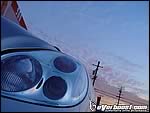
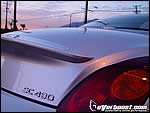
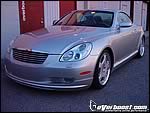
    Our victim this time is a Lexus SC430. As many of you know, Lexus is not known for their hot rod V-8 exhaust systems- smooth and quiet are more their bag. Smooth we’re ok with, quiet we’re not. Luckily neither is anyone at Blitz. After researching the limited available choices for the SC430 we decided to give Blitz a ring and try out their system.

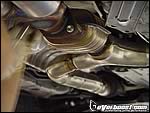
    The stock SC430 exhaust is not all that bad for a system that looks like it was run over by a forklift. Lexus decided to pinch the tubing on the system almost flat right before it bolts to the muffler. It’s an excellent decision when it comes to causing huge restrictions in exhaust flow and it’s just the thing you need to stunt top end performance. The beautiful matte black, road grime magnet of a muffler was the perfect edition to the pancake pipes positioned right before it. The factory Lexus muffler was doing everything in its power to fight off a throaty sound which is fine for the average luxury fan that needs to roll to Starbucks in stealth mode.

    Because the car is a Lexus and not a 1975 AMC Pacer, we figured we should have someone who knows what they are doing install the exhaust system on a car that costs more than our collective yearly editorial salaries. After all, you break it you buy it so we found ourselves at Luxury Motorworks again, because we didn’t want to be staring at each other wondering where these spare nuts and bolts go.

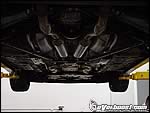
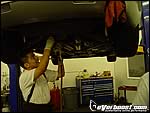
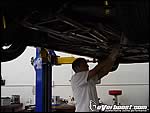
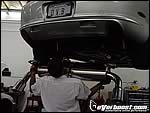
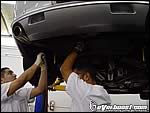
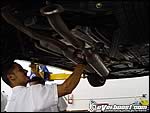
    Once at Luxury master technicians Jose Garcia and Jesus Gonzalez put the car on the lift and went to work at removing the enormous rear muffler and tailpipe section. Removal of the rear exhaust section was straightforward. They began by separating the stock rear muffler from the rest of the exhaust by removing the four bolts holding the flanges together. Next the left and right exhaust hanger brackets were unbolted from the body and the muffler assembly came down.

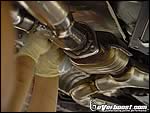
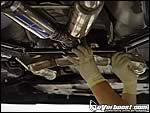
    Next, Garcia and Gonzalez began removal of the center section which bolts to the cat. Before the mid section—including the stock resonators—can be removed there is an underbody brace which has to be dealt with. Once out of the way the two bolts and nuts attaching the mid-section to the Y-pipe were removed and some WD40 was sprayed on the exhaust hangers so they would pry off and the piece dropped right down.

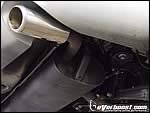
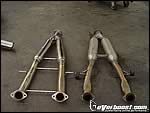
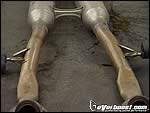
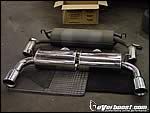
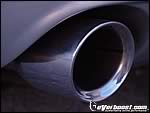
    When you place the stock exhaust next to the Blitz piece you can see why the stock pieces are so poor. The Blitz piping is slightly larger, but the bends are smoother for better flow and there are no unnecessary pinches or creases like on the stock system.

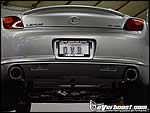
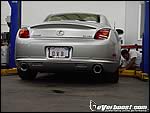
    The Blitz System uses dual mufflers, not just one big muffler with dual outlets. There is even a crossover pipe between the mufflers to help tune the sound and performance of the system. There is no comparison between the systems as far as looks go. The polished look of the Blitz exhaust is second to none and the plain stock look of the Lexus exhaust is, well, stock.

    Garcia and Gonzalez began installing the Blitz system by bolting up the center resonated section and hooking up the exhaust hangers. Once the first half of the Blitz exhaust was hung we could see what an excellent fit it was going to be.

    The Blitz rear section was hung then bolted up and everything was tightened to the correct torque spec. You do not want to over tighten exhaust flanges like these no matter how well they are built because they will warp, causing an exhaust leak or worse, the nut will come loose and the piece could fall apart.
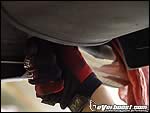
    Once everything was bolted up the SC was lowered down and fired up so it could be checked for leaks, rattles and so Garcia could play car in the driver seat. The moment those eight cylinders fired up it filled the shop with the deep mellow throb only a V-8 can produce, something absent with the stock exhaust.

    On the road the SC430 emits a proper sporting exhaust note anytime the driver gets aggressive with the throttle, and a mellow burble while cruising. You can actually hear the car now where as before it was almost impossible to tell if it were running or not. The SC now emits the proper tone a mature sport coupe should; just loud enough to hear with the top up and mean enough that you want hear the V-8 rip to redline off of every stoplight. Not bad results for a couple hours in the garage.

  • You Need To Hook It Up Part 3

    You Need To Hook It Up Part 3

    12/1/2004
    By: Roger Hewson

    A lot of ground has been covered in the first two installments of You Need To Hook It Up. Part One covered how important chassis dynamics and weight distribution are and after Part Two everyone should have a better understanding of how important tires are to traction. The next move is to go about making the tires’ job of putting power to the ground as easy as possible for the amount of power you have.


    Peg legs are for pirates
    In Part Three we’re going to tackle how the choice of a limited slip differential and different types of limited slip differentials will affect how efficiently the tires put the power to the ground. Remember that the more efficiently you put power to the ground, the more bang for your buck you get out of the horsepower at the flywheel.


    Next to tires, a limited slip differential or LSD is going to do more for hooking your car up than anything else. It lets you divide the power between two tires instead of trying to get it all down into one- that also means double the tire size and contact patch. For example, instead of trying to run 300 horsepower through one tire you’re sending 150 horsepower through two in an ideal world. That does a lot in the game of trying to minimize wheel spin.


    A good LSD is not going to give you twice the traction in reality, but there will be a huge difference because if set up right. A big advantage of having an LSD is consistency which makes it ideal for bracket racers. Because you are able to put the power down more effectively, launching the car becomes easier and more repeatable. It is also a must for high-horsepower applications since a pair of 10-inch wide slicks does a lot more good when both are seeing power.


    How does an LSD perform such magical acts? First it helps to understand how a standard non-limited slip (or open) differential operates. One of the jobs of the differential is to take the energy coming from the transmission and direct it toward the tires. With an open differential, the power is channeled through either the right or left tire. When that one tire loses traction, the other side does nothing to compensate for the spin. Open differentials are more cost effective for the OEMs so they come standard in most economy cars. That’s fine for the average drive to the grocery store, but it’s bad news in any kind of race or serious driving.


    The way the energy travels is also known as following the path of least resistance and it is always the way power goes in an open differential. It is the reason why a vehicle with an open differential will spin its tire on ice, mud, or water when the other is on dry pavement. It’s also why the redneck in the pickup only spins one tire when he tries to do a burnout in the K-Mart parking lot.


    A limited slip differential helps direct the power back to the other side where it can be turned into forward motion and not wasted in wheel spin. Now that we have a little understanding on how open differentials work and why they are bad we can discuss the basics of limited slip differentials and why they are better.


    An LSD helps direct the power to where it can be turned into forward motion.
                  

    The limited slip differential does exactly that, it limits wheel slip by directing the energy (which would have been wasted in wheel spin) and dividing it up between the tires to provide more traction through a series of clutches, gears or fluid couplings . Clutch type units are identical in design to an open differential except they control the flow of power with a set of high-friction, multi-disc clutch packs for the left and right axles and a spring set between them to provide extra ‘lock’ by putting the clutch packs under tension. The tighter or looser the clutch pack, the harder or easier it is for the wheels to turn different speeds. The same goes for the amount of friction in the clutch plates, how many plates, tension in the springs, etc. Once again a basic explanation, but the theory is the same for any clutch type LSD. One of the biggest advantages of the clutch type LSD lies in the flexibility of its setup- if you want less lock up run a smaller number of friction plates in the clutch packs. If you have a problem with spinning only the left or right tire run the clutch packs more aggressively with more clutch discs to produce more friction if you can.


    The down sides to a clutch-type diff are that it does require periodic rebuilds once the clutch discs wear out. The more aggressively the clutch packs are set up, the quicker they are going to wear. They can be noisy too. The more lock you have dialed into a clutch type LSD, the more noise they make while turning. They tend to emit a low pitched groaning noise whenever the wheels are turned at low speeds. On a front wheel drive car a clutch type LSD tends to add steering effort at low speeds with a really aggressive, race type clutch setup.


    Ray Nakadate of KAAZ differentials says the proper setup for a clutch-type diff depends on how much time you spend at the track. “For a street driven car, I would set up the diff at 60 percent lock so it would be better suited for street and track use,” says Nakadate. “This way the car performs well at the drag strip and is quiet on the street. If the driver is more serious about turning good times at the track 100 percent lock is the only way to go.”


    Gear driven limited slip differentials work in a completely different manner. They rely on gear sets which are able to distribute the power between the tires as needed. If the left tire has significantly more traction than the right the differential will transfer a percentage of power to the left tire. There are left and right angled gear sets which overlap with each other slightly inside the differential to provide the power transfer. The angle (also called the helix angle) cut into the gears determines how quickly and how much power gets transferred between the left and right tires. Gear driven limited slip differentials are constantly shifting power around to achieve the best traction possible.


    A gear driven LSD is quiet, smooth, and quick reacting to most situations requiring torque transfer between the left and right tires and are constantly searching for the best traction possible. Another plus to many of the gear driven differentials like the Quaife unit for example is they are significantly stronger than the open and clutch style differentials and they do not suffer from any significant wear even under severe conditions. Quaife America is so sure their LSD will not fail they offer a limited lifetime warranty on the unit even if it is used in competition.


    The gear driven units do have a down side though. Units like the Quaife require some kind of preload on both tires at all times. What this means if you lift one tire in the air, or have a tire hydroplane in the burnout box water, the diff will go open and spin one tire because there is not enough preload on the gears for the differential to operate. Gear driven differentials can also torque-steer without notice and with a lot of force if they suddenly find grip at one wheel on a low traction surface. What happens is the diff sends the majority of power to one tire because it finds grip there and the car violently pulls to that side.


    Figuring out which differential suits you best is up to you. Each differential has its up and downs and depending on your particular situation and habits, one will suit you better. If we use our friend with the Civic from Part Two as an example, he would be a prime candidate for the Quaife or the KAAZ set at 60 percent lockup because the car is mainly street driven. He or she would not want to put up with the increased steering effort and the noise of the KAAZ or other clutch type differentials at 100 percent lock on a daily basis. The Quaife may still be the friendlier of the two on the street for a medium horsepower front-wheel-drive car.


    Regardless of which LSD you pick there is no denying the immediate benefit in traction. Limited slip differentials are a must in any performance car especially if you are going to take it to the track. An open differential will be a thorn in your side for as long as you have it. You will need to run bigger tires to compensate for the lack of traction, launch less aggressively, shift easier or deal with a number of things which will slow you down. It’s no fun doing the one wheel peel, open differentials aren’t called ‘peg legs’ for nothing.
  • You Need to Hook it Up! Part Two

    You Need to Hook it Up! Part Two

    11/24/2004
    By: Roger Hewson

    Welcome back to class students. After reading the first installment of our mini-series on putting the power to the ground in your front-wheel-drive car, there should be a decent understanding of how the chassis on your FWD should be set up. In this installment we are going to get down to some of the simpler reasons you spin tires at the drag strip and how the wrong choice in tires will kill the way your car comes out of the hole.


    We have all tried to go fast without decent tires at the track. Everyone has seen the “drag racer” with the EK Civic powered by a built B20 trying to get the power to the ground through a four-puck race clutch, Type R gears with no LSD and 17 inch Volk TE37 wheels. The pricey wheels are wrapped with a set of 215/40/17 Champro tires bought for $30 at Cooters Discount Alignment and Rubber and he or she can’t figure out why the car spins the tires through fourth gear no matter how much smoke they make in the burnout box. Hmm…


    So what’s going on here? What can be done to get our fictitious friend mentioned above flying down the track? Like we said in Part One, for every action, there is a reaction. Some simple problem solving should help out our knowledge-challenged buddy. Let’s try to figure out what he is doing wrong here.


    Bigger sidewalls on a higher profile tire act as a cushion.
                  

    First of all, the tire is the most important thing there is when it comes to putting power to the ground. Who hasn’t seen a tire commercial going on and on like a broken record about the four little patches which separate you from the road? Anyone who knows anything about cars will tell you tires are critical to traction just like feet are critical to walking.


    To find out more we went right to the source and spoke two of the most respected tire companies when it comes to drag racing; Mickey Thompson and BFGoodrich. We pretty much got the exact same stories from their tire engineers regarding what works and what doesn’t. Jason Moulton of Mickey Thompson and Oscar Pereda of BFGoodrich gave us the skinny on what the right meats are to use on your FWD car and why.


    Both Pereda and Moulton recommend changing to a wheel and tire combination that gives you as much sidewall as possible. “The sidewall of the tire absorbs power when you launch the car aggressively,” says Pereda. “This goes for a dedicated drag tire or just a regular street tire.” The bigger sidewalls on a higher profile tire act as a cushion and soften the shock to the contact patch of the tire helping to prevent wheel spin. The larger the sidewall, the more cushion area there is to absorb shock allowing a harder launch or more power to be applied.


    This is especially true when it comes to a dedicated drag tire like the BF Goodrich Drag Radial or the Mickey Thompson Sportsman because their sidewalls are designed to absorb the energy which causes wheel spin by being softer so they wrinkle at lower air pressures, making them stretch like a rubber band. “The smaller the wheel the more sidewall you can run and the more elastic the tire is going to be when launched,” says Moulton. “But you can only go so small with a wheel and so big with the sidewall before changing how tall the tire is and messing with the gearing or running into fitment or stability issues,” says Moulton. So how do we know what tire size and type to run?


    Before we figure out what size we want, we need to know what type of tire we are going to run, normally either a bias ply or radial. The terms bias ply and radial have to do with the construction of the tire and how the belts of the tires are wound and assembled. The construction of the bias ply tire is much more pliable than the radial because the arrangement of the nylon belts which give the tire it’s shape and strength are woven at 30 or 40 degree angles. When a Radial tire is made the nylon (or steel) belting is woven in a radial pattern and there are usually more layers woven in for more strength.


    Because the bias ply tire is so much more pliable high horsepower cars like to run them because they tend to expand and grow taller at high speeds, allowing the car to run more mph at the end of the track. They also tend to wrinkle much easier at lower pressures than radials do without deformation of the contact patch. The downside is because of how pliable they are they tend to walk more meaning the car will dance side to side while driving because the sidewalls are not stiff enough to prevent the car from moving around. This can be a bit unsettling at over 100 miles per hour in a FWD car considering these are the wheels you steer with. One person told me the best thing to do is just hang on and hold the wheel straight. Radials, because of their sturdier construction are much more street friendly which comes into play if you don’t have the bankroll to buy a wheel/tire combo solely for the track.


    BFGoodrich developed a special compound for their FWD Drag Radial, making the tire more controllable


    Running a radial like the BFGoodrich Drag Radial on the street would feel no different than having a typical radial tire on your car. When you get to the track the difference can be felt with almost slick-like traction out of the hole. Theory would tell you the radial construction of the BFGoodrich tire would put it at a disadvantage on the starting line against a bias ply tire, but it’s not completely true. Paul Efantis would pull the front tires off the ground regularly when he was driving his Toyota Supra in 2003.


    “Progressiveness is one of the keys to the success of the BFGoodrich Drag Radial,” says Pereda. “A tire has to break loose progressively or you’re not going to be able to control it.” BFGoodrich developed a special compound for their FWD Drag Radial which made the tire extra controllable after breaking loose and realized it would work well on both front and rear-wheel-drive tires and improved the entire Drag Radial line. “Our tires are very gentle when they let go, easy to control,” says Pereda.


    What all of this means to our EK buddy is a few things. If he wants to keep the big Volk wheels and run a 17-inch BFGoodrich Drag Radial he can. Running a smaller wheel is a problem for some people who need the clearance because of big brake setups. The low profile tire is not going to hook nearly as well as a tire on a 13 or 14 inch wheel with a ton of sidewall, but it will be a huge step in the right direction. When the Drag Radials break loose they will do so with plenty of warning and will be very controllable. It still will not allow the EK Civic driver to come out of the hole with the authority they might want to, but they can lay into the throttle much earlier then was possible before.


    The tire size is related to the goal of the racer.
                  

    “The tire size is related to the goal of the racer,” says Moulton. “If you are bracket
    racing, use the tallest, widest tire you can fit for consistency and if you are
    heads-up racing, use the smallest tire that will get the job done.” So we need to look at how often the car is raced, and what kind of racing our little friend does. Remember this is just an example. You can apply it to whatever you drive, just change the variables to suit your needs.


    A car with modest power doesn’t need a huge tire like the turbo cars run. An ideal setup if the car does not have a set of big brakes is a set of 13-inch wheels with the shortest, fattest tires allowed without running into wheel spin problems on the starting line. Like we mentioned above how well the car is going to hook up depends on how serious the owner of the car is willing to get. A set of 215/40/17 Drag Radials will have some serious bite, but they will not give you the slingshot launch of a pair of tall BFGoodrich Drag Radials or Mickey Thompson ET Streets mounted on a set of 13 or 14 inch wheels would have. Now how about those clutches and LSDs?


  • SEMA Show 2004 – After Dark

    SEMA Show 2004 – After Dark

    It’s not the actual show that makes SEMA such a treacherous week. If you think about it, the Las Vegas Convention Center doors are only open nine hours a day. That gives plenty of time to relax over dinner, catch some sleep and then hit the show all over again the following day. But throw the nightlife of Vegas into the mix and staying locked up in a hotel room being good little boys and girls is a completely different story.

    As one British photographer put it at the conclusion of SEMA Week, “Vegas is insane. Nobody ever tells you when to stop. You can be passed out on the ground in a pool of your own vomit and some bird (That’s a lady to us Yanks – OVB) will come up to you and ask you if you want to dance.” Yes, there’s a reason why it’s called Sin City.


    What happens in Vegas is supposed to stay in Vegas-it’s an unwritten rule. As much as the Overboost crew respects that line, we decided to somewhat cross it and bring you the inside scoop on what goes down when the show ends. Between covering SEMA, providing daily updates and trying not to die of exhaustion in the process, we mustered up enough energy to hit up as many industry parties as we could.

    Tuesday
    Forget pacing yourself in the SEMA party marathon, the nightlife jumped out to a quick start while everyone was still fresh. The agenda for the evening promised plenty of dancing, food and open bars. Tuesday’s main event was the Scion party, but until we made it there a couple of other stops were in order.

    Autotecnica got the ball rolling with a media reception where the theme was PBR, or for those culturally challenged and unaware of the ways of the good ol’ boys, the Professional Bill Riders. The pair recently inked a deal for a line of Autotecnica/PBR products. And before you ask, yes, gun racks are part of the lineup. Keeping with the theme, there was a bull in the corner for those brave enough to give it a try. Instead of grabbing the bull by its horns, we opted to go for the other half and really show him who the boss is. (Autotecnica also announced a bunch of new parts for the VW Beetle, but sometimes bestiality has to take center stage – OVB)

    Apparently the West isn’t as wild as it once was. Taking advantage of large, stuffed farm animals is no longer deemed acceptable behavior so we packed up our gear and headed across the hall to Honda’s reception. Things were in full swing by the time we arrived and judging by the crowd, we really wish we brought our Hostess paraphernalia along for the occasion.

    Drifter Daijiro Yoshihara (left) decided to stay high on life in the early stages of a long night and threw back the caffeine at a record pace. Mike Mucklin (center) from GT Live was mixing business with pleasure while the others scrounged free food and watched us hard at work.

    It wasn’t until the Scion party later that night until you could truly understand the lengths people will take to attend an evening with an open bar. The Rum Jungle in Mandalay Bay was packed wall-to-wall with people who somehow managed to get on Scion’s guest list. Navigating through the club was an experience all its own and we don’t even think Scion understood their own power.

    When we finally made it through the door we were greeted with the smiling face of LJ Garcia. We also had a chance to see one proud soul passed out and being carried out of the club by his friends before the clock had a chance to strike 11:00 p.m. Technically he wasn’t available for comment, but when we tried to get a reply to how the party was, all he could do was grunt a few times.

    If you’ve ever wondered what editors of Road &Track do when they aren’t out testing cars trying to formulate unbiased opinions, we aren’t going to be much help because we have no clue what act they were trying to perform on each other. Maybe the tie jerk is the trendy new very Euro mating call of the elite.

    We would like to think that our method was better. Sunisa Kim was standing all alone in the corner so we felt obliged to entertain her for a while. After swearing up and down that we could make her famous, she was kind enough to pose with us for a picture. We thought we were smooth until two minutes later she asked us to take a picture of her and Art Michalik from Yokohama Tires. Jealousy will get you everywhere our dear Sunisa.

    This group of misfits came all the way from north of the Canadian border. Going simply by the name of the 905 Crew, we found there are striking similarities between the 905 and the 909. Stick a flat-billed baseball cap sideways on these boys, put them in a lifted truck with a dirt bike in the bed and you would never know these northerly neighbors weren’t bros.

    Tuesday night was also the first chance we had to hang out with The Nestor. You have to be beyond cool to only have one name and The Nestor was the closest thing Vegas had to Bishop Don Magic Juan during SEMA Week. To say he has a way with the ladies would be the understatement of the century. Wherever he went he owned them with his charm.

    The Nestor spent the better part of the evening trying to avoid crowds of groupies that heard he was in town. But there was one lady who was able to hunt him down. Her reward was a complimentary ride back to her hotel in the Overboost tC support vehicle where she had a chance to enjoy it with The Nestor and put her number in one of his cell phone’s last remaining slots.

    It was only Tuesday night, well, early Wednesday morning, and we had already made some memories. We just had to drop one more guy off and it was back to the hotel for a couple of winks before doing it all over again the next day. The drop-off didn’t go as smoothly as we planned, but eventually everyone made it back to their rooms.

    Wednesday
    It would take a lot to live up to the previous night’s experience. Luckily we did have an ace in the hole with an invitation we received from Claus Ettensberger to attend a CEC function. We’ll get to that later. First we had to find something to fill the three-hour void between the end of the show and the CEC gig and work wasn’t an option. There would be plenty of time for that when we got back to the hotel at 4 a.m.

    The Toyota family wasn’t ready to retire their party hats just yet and they hosted a reception Wednesday evening. While Scion’s party was more like what you would expect when your friend’s parents went out of town for the weekend and left the key to the liquor cabinet along with enough money to hire a DJ, Toyota’s reception was a bit calmer. There was still room for a little controlled misbehaving though.

    Ara Arslanian and Matt Scranton both drive Toyotas on the NHRA Sport Compact Series. Scranton came out of nowhere at the World Finals in Pomona to become the 2004 Pro-RWD Champion and the two still had some unfinished business to take care of. Arslanian struck first with a quick right uppercut. Dazed by the blow, Scranton retired to his corner for the standing eight count. His trainer threw in the towel before the ref could hit six and the two vowed to have a rematch on the 1320 in 2005. All kidding aside, it still happened to be the least staged boxing match in Vegas this year.

    A couple other heavyweights from the sport of drag racing could also be found at the Toyota reception. Kenny Tran who drove the Quaker State Honda Civic in Hot Rod the past two years made an appearance at a Toyota event? Scion is a Toyota offspring and Tran/Jotech built a clean, powerful tC that was displayed at SEMA. Also in attendance was Jerry Toliver, driver of the Schick Quattro/Open Water Toyota Celica Funny Car.

    As the reception ended, we faced a difficult decision. Our editorial team had to split up and share our time among the CEC party and the Injen Technologies party. Roger Hewson headed to Club Risque at the Paris for the Injen event where he met up with a team of other highly trained Overboost staffers, one of which had enough liquid courage to actually talk to a pair of models instead of standing in the corner thinking about it.

    Everyone in attendance had a chance to spin the Injen Wheel of Prizes. As you can see from the excitement on Hewson’s face, some of the best things in life are free. The bag of goodies mysteriously disappeared before it could be brought back to the office and divided up among the staff. We aren’t going to point any fingers, but we have our suspicions.

    One thing the Injen party had that most others were a little lean on was a tangible amount of women hanging out that weren’t actually being paid to be there. The ratio was somewhere in the neighborhood of three girls to every 100 guys which was triple the SEMA average. Hey, what do you expect from an industry dominated by testosterone?


    Right about the time that part of the OVB staff was trying to sneak a second spin of the wheel at Injen’s shindig, a few other members were at the Bali Hai Golf Club rubbing shoulders a whole different crowd at the CEC party. (Mainly European models that stood more than six feet tall without heels on – OVB)

    We wait all year for Mr. Ettensberg’s invite to come in the mail. Frankly, it’s the closest will ever be to living life like a social elite. It provides a chance to get up close and personal with Mercedes shod with Lorinser products, BMWs outfitted with AC Schnitzer and new for this year, Ferraris displaying the Novitec Rosso name. Not to mention it’s the only time in our lives when supermodels will actually look at us and smile.

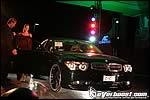
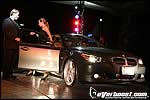
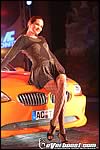
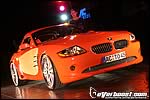
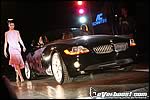
    One of the biggest draws to the CEC party is the fashion show and this year was no different. It’s not your typical runway event. It’s more of CEC’s twist on how an automotive enthusiast would want a fashion show to be. One by one beautiful cars drove up and took the center position. As if that wasn’t enough, one by one the doors to these rolling pieces of art opened and out steped a lovely model draped in designer clothing. It’s simple yet brilliant at the same time.

    Thursday
    Thursday marked another day of Overboost staff divides as there was once again going to be two premier parties happening at the same time. We were faced with a dilemma and after drawing straws it was quickly remedied. The winner was going to the Hard Rock Hotel and Casino and the other winner was headed back to Club Risque in the Paris. (Music, booze and ritzy venues-how can you declare a loser? – OVB)

    The Pro Motion/AEM/DC Sports/Sparco/Rotora/Sprint Suspension/Quake Entertainment and Phoonv2 party was going down at Risque and there was still good fun to be had as the week wound down. If you look closely at the picture on the right, there are five familiar faces in the sport compact world. Be the first one to send an email to editors@overboost.com with your name, address and all five names and we’ll send you a DVD, hero card and collectible car all signed by IRL driver of the Pioneer/Argent Mortgage Number 15 car Buddy Rice.

    From Paris to the Hard Rock Hotel and Casino we have the RECARO/BASF/Madico/Folia Tec/Fox Marketing Bray Group/Industry Leading Parties event. Normally the space by the pool at Hard Rock is reserved for A-List celebrities and people that know A-List celebrities. We are neither, but somehow we managed to get our hands on an invite from RECARO.

    Team Toyo was out and causing trouble around the pool. Hiding in the cabana was the crew from Rockford Fosgate while Fred Chang and Ryan Sage from Slipstream also joined in on the fun. The venue was almost as awesome as the three open bars on the upper level and the spectacular spinach and cheese dip that served as Thursday’s sole meal.

    We also had the chance to make two new friends. Yutaka Sampei is a senior manager at Sansho Co. LTD and his friend works in Japan with Fu-Tech Co. LRD. We don’t speak or read Japanese so we have no clue what either of those companies do, but Sampei was one cool cat. We rescued him from a wrong turn in the restroom and in return he called us gaijing and introduced us to his associates. Only at SEMA.

    By the time Friday hit we were completely out of gas. As has become a SEMA custom for the staff, at the end of the week we headed to the seafood buffet at the Rio to indulge in all of the sushi and lobster we could pack away. Once all of the excess finally hit it was night night for the OVB crew.

    We can almost call it another year in the books, but we still have one more matter to tend to. Check back soon to see the cars that were responsible for taking us to the show and all of the nightlife. They were both the same color and both had Scion emblems on them, but they weren’t the two xBs that rocked Sin City last year.

  • You need to hook it up! – Part one

    You need to hook it up! – Part one

    10/15/2004
    By: Roger Hewson

    Front-wheel-drive cars have come a long way in the last 15 years. It used to be a common belief 200 horsepower was the limit of a FWD platform. Engineers said wheel spin and torque steer were just the beginning of the problems that more power would bring.


    That was until Cadillac, yes, our friends at the company that makes cars for silver haired bingo, mobsters and rap stars kicked the door for fwd performance wide open in 1993 with the 290-horse V8-powered Allante convertible and a year or so later, the 300 horsepower Seville and Eldorado. The engineers at Caddy even managed to make it work without the magic of traction control. The blue hair crew had never had it so good and you could hear them lighting the tires from Palm Springs to Orlando.


    What gives? Why can an OEM car like the 290-horse Allante or the 260-horse Acura TL/CL with a six-speed manual gearbox put the power to the ground so well while at the same time when you try to get 200 wheel horsepower to stick in a Civic all you get is big clouds of tire smoke in first and second plus another 300 dollar bill from the guy at the tire shop? One word: Engineering. The teams who designed those cars thought about things like weight distribution, gear ratios and tire size, just to name a few, so all the power could be put to good use.


    So what can you do with you do with your street car to help get the power to the ground without turning it into a tube frame racecar? It’s all pretty simple actually. Everything from shock valving to tire alignment plays a role in how your car gets moving when you push the pedal to the floor. “Finding traction is not a black art like some people think it is,” says Russ O’Blenes, a chassis engineer who works for GM Racing and just happens to be one of the brains behind the suspension used by Lisa Kubo and Nelson Hoyos. “You need to remember to look at the basics. Everything happens for a reason, you just need to sit back and think about what is causing whatever you are having a problem with.”


    After spending weeks researching the ins and outs of traction, we have discovered that it is a bunch of little things combined which can make a big difference in the available traction.


    Get Your Car Stiff

    A stiff spring rate in the rear suspension will limit weight transfer which means more weight hanging over the front of the car during acceleration. More weight over the front during the launch equals better 60-foot times in the world of FWD dragging. It’s a lot like when rear-wheel-drive cars have most of the weight over the rear tires during wheels-up launches, but only in reverse. The problem is because of the physics of a hard launch, the front still wants to rise, causing it to fight the rear. Unfortunately there is no fix with the remaining weight transfer, but stiff spring rates in the rear do help fight the transfer.


    Shocks Have Valves Too

    Shock valving is another often overlooked step to traction that the domestic crowd has been using since getting two miles to the gallon was cool. According to O’Blenes, you want lots of compression damping in the front shocks. What this does “push” the front tires into the ground when the front lifts to keep them firmly planted. Soft rebound damping in the front will allow the front to settle back down for aerodynamics. You’ll want the opposite effect happening in the rear.


    Baby’s Got Back Doesn’t Help in FWD Drag Racing

    You can also help the shocks and springs out manipulating the car’s weight distribution. GM has found that the ideal distribution is around 70/30, meaning 70 percent of the car’s weight in the front and 30 percent in the rear. Placement is not incredibly critical as long as that weight is kept low in the chassis. Keeping the center of gravity low is more important than putting weight on the front tires. When the weight is low in the chassis it reduces the pitching of the weight rearward under acceleration leaving more weight on the front tires. Another trick is trying to keep weight closer to the center of the car. This also reduces the pitching of weight rearward by giving the front of the car less leverage when you accelerate.


    Flex Your Way to Traction

    “You want to reduce flex as much as possible in the rear suspension of the car” says O’Blenes. Reducing flex in the rear suspension and in its joints like where the ball joints mount to the control arms, has the same effect as adding spring rate by reducing weight transfer and there is also an added bonus; it makes the car more consistent because the suspension mounting points are not squirming around.


    Point Your Toes Out

    One trick for a little more speed on the big end is to run a slight toe out in the alignment settings. “We see most people running toe in and it doesn’t make any sense because the wheels and suspension crawl forward during acceleration” says O’Blenes. Running toe in will scrub off speed during acceleration. The more toe in, the more speed gets scrubbed off. By toeing the car out the wheels crawl to a zero toe position so they do not lose any speed at all, allowing you to get a slightly more mph on the top end. How much toe you run depends on the suspension setup of your car. Some cars have a lot more suspension movement during acceleration than others do. One way to check it to watch your car on the dyno and see how much the wheels move. Play with different adjustments of toe out to see which yields the best performance.


    Sorting out these issues on a street car will take some trial, error and a fair bit of planning on your part. Don’t get frustrated, the results in the end will be well worth it; you’ll be rewarded with a much more consistent, easier to launch car. In part two of the series we will tackle tires, limited slip differentials, and give you some ideas on how to execute the ideas we talked about here. Remember just because a car is front-wheel-drive doesn’t mean it is immune to the laws of physics; it’s still just a car.
     

502 Bad Gateway

502 Bad Gateway


cloudflare