Physical Address
304 North Cardinal St.
Dorchester Center, MA 02124
Physical Address
304 North Cardinal St.
Dorchester Center, MA 02124
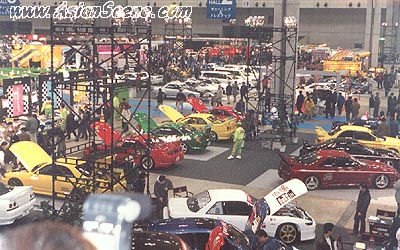
Date: January 8–10, 1999
Location: Makuhari Messe, Chiba (Greater Tokyo Area)
Attendance: ~200,000+ (Historical Estimate)
The 1999 Tokyo Auto Salon (TAS) is widely regarded by historians as the single most critical event in the history of the modern “JDM” tuning era. While previous years were about the rise of the Mitsubishi Lancer Evolution and the Toyota Supra, January 1999 marked a tectonic shift: the public debut of the Nissan Skyline GT-R (BNR34).
Held just days after Nissan officially announced the car, the show floor was a frenzy of R34mania. However, beyond the factory debut, the 1999 salon defined the “Max Power” era of Japanese tuning, where shops moved away from 0-400m drag times and began focusing on 300km/h+ top speed runs on public highways.
If you were at Makuhari Messe that weekend, you were there to see one car. The R33 GT-R had been considered too bulky (“the boat”) by Japanese tuners, so the return to a shorter wheelbase with the R34 was celebrated as a return to form.
While the GT-R stole the headlines, the “Old Guard” of the tuning world brought their most iconic builds to 1999.
1. Top Secret: The GT-300 Supra
Kazuhiko “Smokey” Nagata unveiled his golden masterpiece, the Top Secret GT-300.
2. RE Amemiya: Super GReddy 8
Isami Amemiya, the “Rotary God,” debuted the Super GReddy 8, a hot pink Mazda RX-7 (FD3S) featuring a Porsche 911-style front end conversion (AC987 kit).
3. The “Wagon” Boom
A unique trend of TAS ’99 was the explosion of performance station wagons.
The 1999 Auto Salon marked the end of the “Yatabe” era (testing top speeds at the Yatabe banked oval). With the Yatabe test track closing, the major tuning houses (Blitz, HKS, Top Secret, Veilside) pivoted their marketing toward “Street Legal” top speed.
The 1999 show is often cited as the peak of the “Golden Era.” It was the last year before strict emissions regulations began to strangle the RB26 and 2JZ engines, and it was the launchpad for the R34 GT-R, the car that would eventually become the global face of Japanese car culture.
The server cannot find the requested page:

